Renewable energy sources are supplies of energy that nature replenishes continuously: sunlight, wind, flowing water, heat from underground and plant material. Each one produces power differently, suits different places and varies in how steady its output is.
This guide compares the main sources side by side, then points to detailed articles on each technology and on the storage, grid and cost questions that decide how they fit together.
What makes an energy source renewable
The U.S. Energy Information Administration (EIA) describes the idea in one sentence. According to its renewable energy overview, “renewable energy is energy from sources that are naturally replenishing but flow-limited.” Renewable resources are virtually inexhaustible, yet each is limited by how much of it is available at a given place and time. A sunny desert has plenty of sunlight but little falling water, and a river valley is the opposite.
The EIA groups the major types into biomass (wood and wood waste, municipal solid waste, landfill gas and biogas, and biofuels), hydropower, geothermal, wind and solar. Together they supply a modest slice of total energy but a much larger slice of electricity. In the United States, the same overview reports that renewable energy provided about 9%, or 8.2 quadrillion British thermal units, of total energy consumption in 2023. Electricity tells a different story: the EIA’s electricity overview shows renewable sources produced about 24% of U.S. utility-scale electricity generation in 2025, up from about 12% in 1990.
The gap between those two figures has a simple cause. Much of the energy used for transport, industry and heating still comes straight from burning fuels, while the electricity grid is where wind, solar and hydropower are concentrated. Turning wind farms and solar parks into a larger share of total energy therefore depends on electrifying more of those other uses.
The global picture is similar. EIA’s international statistics put renewables at about 7% of world energy production and consumption in 2024, with renewable generation at about 32% of world electricity production, according to the EIA world renewable energy FAQ. The International Energy Agency (IEA) expects that gap to narrow. Its latest renewables outlook says global renewable power capacity is expected to double by 2030, adding 4,600 gigawatts (GW), with solar photovoltaics accounting for almost 80% of the increase.
Two measures are used throughout this guide. Share of generation says how much of a country’s electricity came from a source in a given year. Capacity factor, as the EIA’s generation and capacity page defines it, is the ratio of actual output to the total potential output over time. A plant with a high capacity factor runs close to its maximum for much of the year; a low one reflects fuel that is intermittent or a plant that is run only when needed.
Solar energy: sunlight turned into electricity and heat
Solar is the most flexible renewable source because it works at almost any scale. The EIA’s solar overview explains that solar photovoltaic (PV) devices, or solar cells, convert sunlight directly into electricity, while solar thermal systems capture the heat of the sun to warm water for homes, buildings or swimming pools, to heat air inside buildings and greenhouses, and to heat fluids in solar thermal power plants.
A single cell makes only a small amount of power, so cells are wired into panels, and panels into arrays. The same EIA page on photovoltaics and electricity notes that PV cells generate direct current, which inverters convert to the alternating current used on the grid. It also tracks how efficiency has moved: commercial panels averaged less than 10% in the mid-1980s, rose to around 15% by 2015 and are now approaching 25% for state-of-the-art modules.
New cell designs keep widening where solar can be used. Thin, bendable cells that can be attached to curved surfaces and lightweight vehicles are covered in the guide to flexible solar cells, which traces how that technology developed and where it is applied today.
Solar has two clear strengths and two clear limits. The EIA notes that solar energy systems do not produce air pollutants or carbon dioxide emissions while operating. The limits are that the amount of available sunlight depends on the time of day, location, season and weather conditions, and that a large surface area is needed to capture enough energy to be useful. Both limits shape how solar is paired with storage and with other sources.
Land use is the question that comes up most often for large solar parks. One answer is to share the land rather than split it, and agrivoltaics looks at raising crops and grazing animals beneath elevated panels, which keeps farmland productive while the panels generate power.
Wind power: turbines on land and at sea
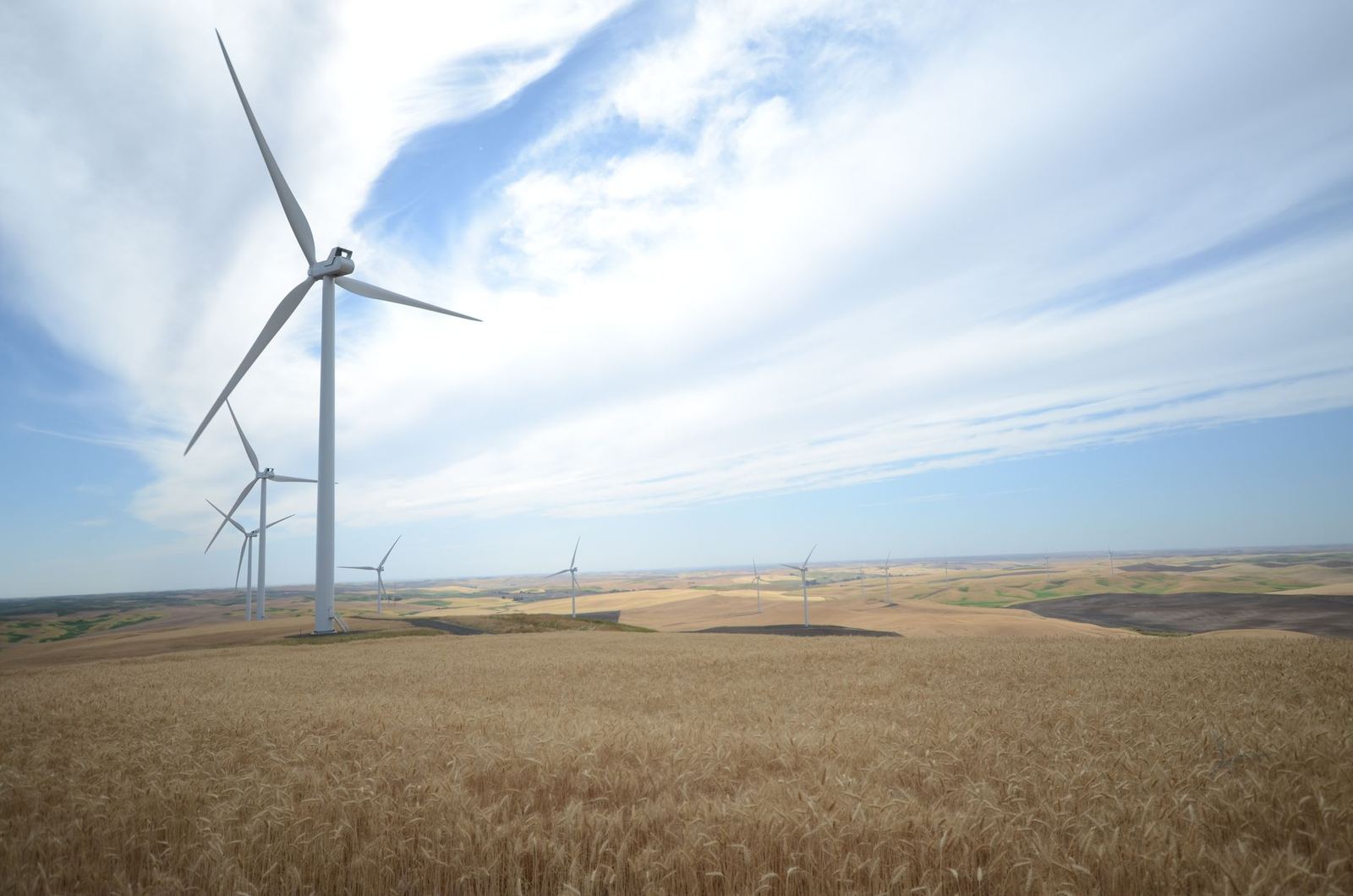
Wind is itself a form of solar energy. The EIA explains that wind is caused by uneven heating of the earth’s surface by the sun, and the U.S. Department of Energy adds that, in a turbine, wind turns the blades around a rotor, which spins a generator, which creates electricity. As its explanation of how wind turbines work puts it, instead of using electricity to make wind, like a fan, wind turbines use wind to make electricity.
Wind has grown quickly where good sites and supportive rules came together. The EIA’s page on electricity generation from wind reports that annual U.S. wind generation increased from about 6 billion kilowatthours in 2000 to about 464 billion kilowatthours in 2025. By 2025, according to the EIA’s electricity overview, wind supplied about 11% of utility-scale electricity generation in the United States and 43% of the renewable portion, making it the largest single renewable source of U.S. electricity.
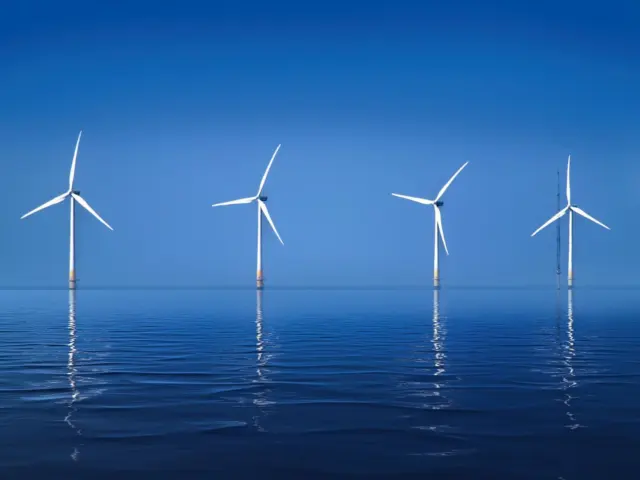
Turbines can also be placed in the sea. Offshore sites need specialised foundations, undersea cables and a grid connection, topics covered in the article on offshore wind power.
Readers weighing the two biggest sources against each other will find a head-to-head treatment of output, land and variability in the article on solar vs wind energy. The short version is that the two often complement one another: solar peaks around midday and in summer, while wind often strengthens at night and in colder months in many regions, although the pattern depends heavily on local weather.
Hydropower and other sources of moving water
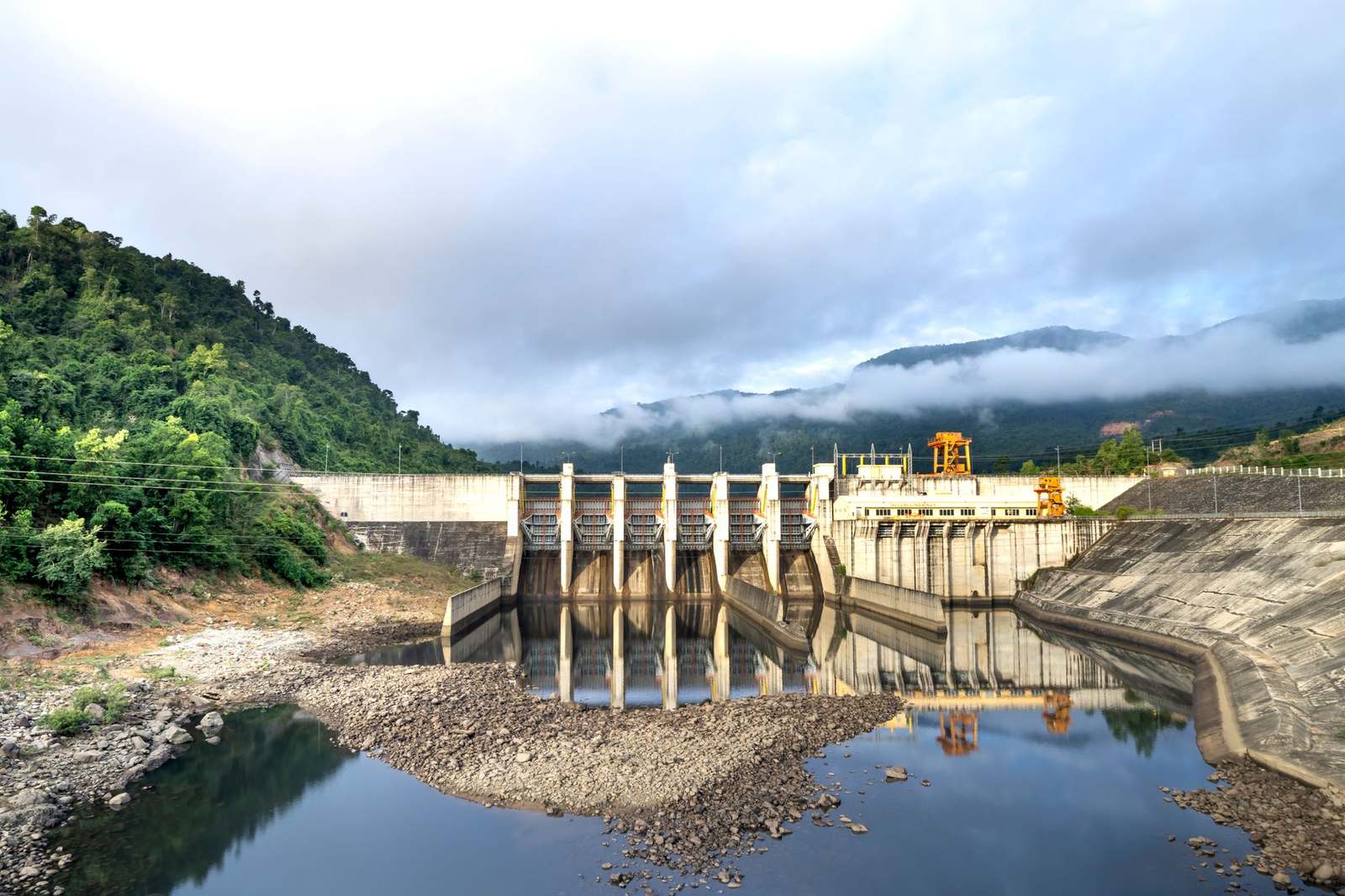
Hydropower is the oldest renewable source used for electricity. The EIA’s hydropower overview records that the first industrial use of hydropower to generate electricity in the United States was in 1880, powering 16 brush-arc lamps at a chair factory in Grand Rapids, Michigan. It was the leading source of U.S. renewable electricity until 2019, when wind generation overtook it.
The physics is straightforward. Water flows through a pipe called a penstock, pushes against turbine blades and spins a generator. How much electricity a plant can make depends on two things: in general, the greater the water flow and the higher the head, the more electricity a hydropower plant can produce. Head is the vertical drop of the water. By the EIA’s 2025 figures, conventional hydropower made up about 6% of U.S. utility-scale generation and about 23% of the renewable portion.
The U.S. Department of Energy’s page on types of hydropower plants explains that the most common type is the impoundment facility, which uses a dam to store river water in a reservoir and releases it through a turbine as needed. Diversion, or run-of-river, plants channel part of a river instead of storing it. Stored water gives hydropower something wind and solar lack, which is the ability to be dispatched when the grid needs it.
That same property makes pumped storage valuable. In a pumped-storage system, water is pumped uphill to a reservoir when power is cheap or plentiful and released through turbines when demand peaks. The EIA points out that such systems generally use more electricity to pump the water than they produce when it is released, so they are net consumers of electricity over a year. Their value lies in timing rather than in producing new energy.
Hydropower also depends on the weather. Seasonal variations in precipitation and long-term changes in precipitation patterns, such as droughts, can have significant effects on the availability of hydropower production, which is why output can change from year to year even when no plant changes.
Geothermal and biomass: heat from the ground and from plants
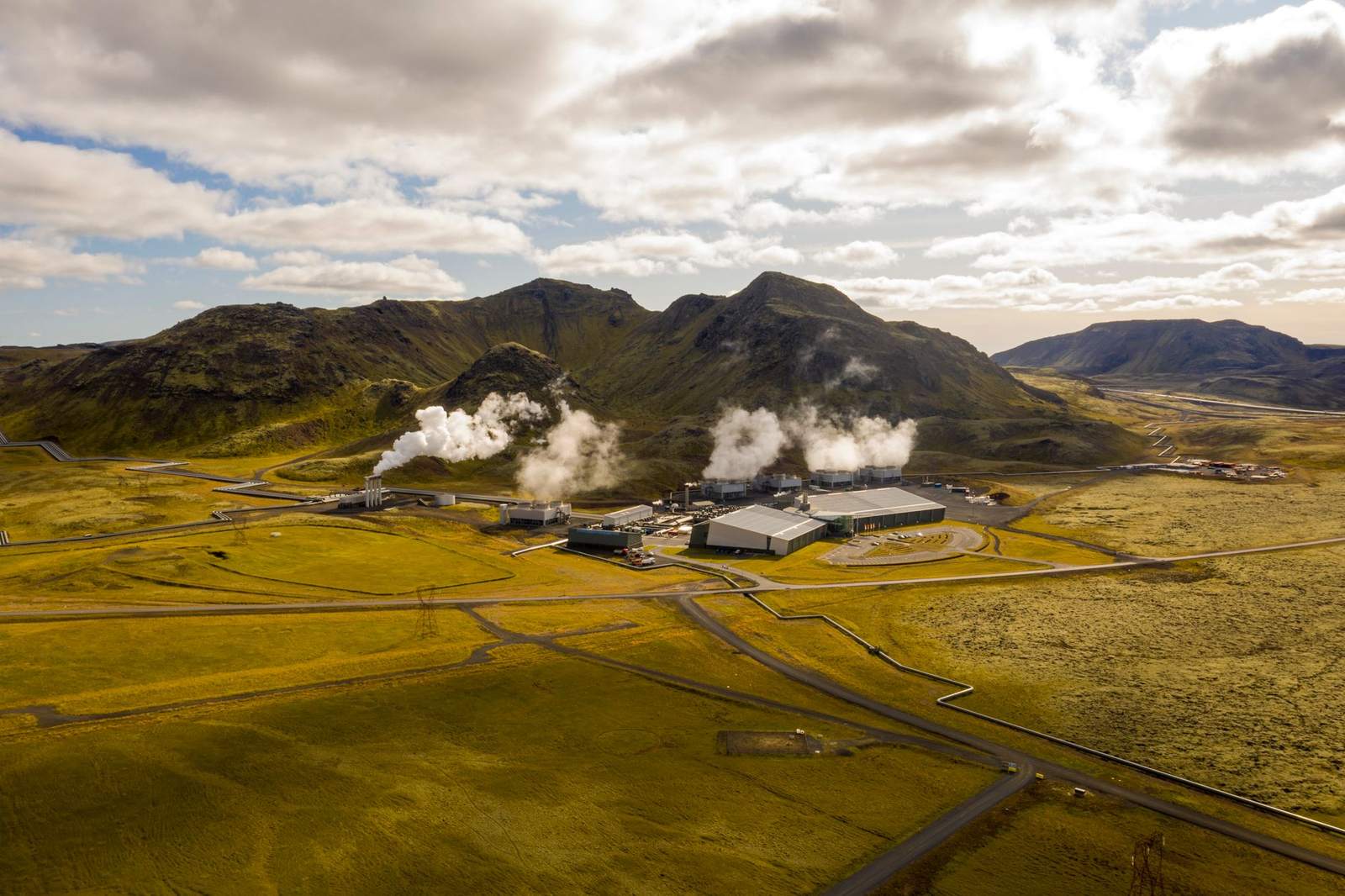
Geothermal energy is heat found inside the earth, as the EIA’s geothermal overview puts it. It counts as renewable because the earth constantly produces this heat. People use it for bathing in hot springs, heating buildings and generating electricity. Unlike solar and wind, it runs day and night regardless of weather, which is why it has a high capacity factor.
Electric power plants use hydrothermal resources, underground areas with both water and heat. The EIA’s page on geothermal power plants says these plants need very hot water or steam, from 300 degrees Fahrenheit to 700 degrees Fahrenheit. There are three basic designs. Dry steam plants use steam directly from a reservoir, and the first geothermal power plant, built in 1904 in Italy, worked this way. Flash steam plants, the most common type, use high-pressure hot water that turns partly to steam as its pressure drops. Binary-cycle plants pass the heat to a second liquid with a lower boiling point, so the geothermal water never touches the turbine.
Geothermal supplies a small share of electricity today. The EIA’s electricity data show that in 2025 it produced less than 1% of U.S. utility-scale electricity generation and about 2% of the renewable portion. The U.S. Department of Energy sees room to grow, stating that geothermal has the potential to generate 90 gigawatts of electricity in the United States by 2050. The article on geothermal energy explains how power and direct heat are drawn from underground and what limits where plants can be built.
Biomass is the other source built on stored energy rather than on a flow. According to the EIA’s biomass overview, biomass is renewable organic material that comes from plants and animals, and in 2025 it accounted for about 5% of total U.S. primary energy consumption. It can be converted to energy by direct combustion, thermochemical conversion, chemical conversion or biological conversion, and direct combustion is the most common method for converting biomass to useful energy. Burning wood for heat is the familiar example; turning crops or waste into liquid fuels and biogas is the more technical one.
In the EIA’s electricity breakdown, biomass was the source of about 1% of total U.S. utility-scale generation and 4% of the renewable portion in 2025. Because biomass is a fuel that can be stored and burned on demand, it can fill gaps when other renewables are quiet, but its climate benefit depends on where the material comes from and how it is grown, collected and replaced.
Renewable energy sources compared side by side
The table below puts the main sources next to each other using United States data for 2025. Share of generation shows how much each contributes to the grid, and capacity factor shows how hard each source’s plants work across the year.
| Energy type | Share of U.S. utility-scale electricity, 2025 | Capacity factor, 2025 |
|---|---|---|
| Wind | About 11% | 33.8% |
| Solar | About 7% | 24.0% (photovoltaic) |
| Hydropower | About 6% | 34.4% |
| Biomass | About 1% | 55.8% (wood) |
| Geothermal | Less than 1% | 65.9% |
Shares are from the EIA’s electricity in the United States overview, and capacity factors are from the EIA’s Electric Power Monthly capacity factor table.
Two patterns stand out. The sources that supply the most electricity, wind and solar, have lower capacity factors than geothermal or biomass. That does not make them worse: their fuel is free and arrives on its own schedule, so their plants produce whenever the wind blows or the sun shines. Geothermal and biomass plants, by contrast, can run almost continuously because their heat or fuel is on hand, yet they supply the smallest shares because suitable sites and feedstocks are limited.
A second pattern is that no source is best on every measure. Solar scales down to a single rooftop, wind needs open land or sea, hydropower needs a river and a drop in elevation, geothermal needs hot rock within drilling reach, and biomass needs a reliable supply of plant material. The right mix for a region follows from what that region has.
The same comparison applies to the other direction of travel, from big plants to small ones. At the household end, a rooftop array and a heat pump behave very differently from a hydropower dam, and the practical choices there are covered in the guide to home energy savings.
Storage, grids and cost: what decides how sources fit together
Variable sources create a timing problem: output follows the weather, but demand follows daily life. The IEA’s executive summary names grid integration, supply chain vulnerabilities and financing as challenges that are increasing even as capacity grows. IRENA, the International Renewable Energy Agency, makes the same point in its report on renewable power generation costs in 2024, saying enabling technologies such as battery storage, digitalisation and hybrid systems are becoming increasingly vital for integrating variable renewable energy.
Batteries are the most visible of those tools. The article on battery energy storage explains how grid-scale batteries absorb surplus output and release it later, and how they sit alongside pumped storage and other options. For longer gaps, some energy planners look at turning surplus electricity into a storable fuel; green hydrogen describes how that works and where it fits.
For households that generate their own power, the question is how exports to the grid are handled. Rules differ by country and by utility, and the article on net metering explains the common approach of crediting rooftop owners for the electricity they send out. People who cannot put panels on their own roof, because they rent or their roof is shaded, may be able to take part through community solar, which shares the output of a single array among several subscribers.
Cost is the other deciding factor, and it is easy to compare badly. A fair comparison spreads all lifetime costs over all lifetime output, which is the idea behind levelized cost of energy. On that basis IRENA reports that 91% of newly commissioned utility-scale renewable capacity delivered power at a lower cost than the cheapest new fossil fuel-based alternative in 2024, and that renewables helped avoid USD 467 billion in fossil fuel costs that year.
Those global averages hide wide differences between countries and projects, and they say nothing about what a particular household or business will pay. Prices, tariffs and incentives change often and differ by country, so anyone considering an installation should consult official national sources and a licensed installer or electrician, who is required for any work on a building’s electrical system in most places.
Frequently asked questions
What are the main renewable energy sources?
The EIA lists the major types as biomass, hydropower, geothermal, wind and solar. Biomass includes wood and wood waste, municipal solid waste, landfill gas and biogas, and biofuels.
Which renewable source produces the most electricity in the United States?
Wind, at about 11% of total U.S. utility-scale electricity generation in 2025 and 43% of the renewable portion, according to the EIA. Solar is next at about 7% of the total, then hydropower at about 6%.
Is biomass really renewable?
It is classed as renewable because the organic material comes from plants and animals that can be regrown or replaced. How much climate benefit it brings depends on how the material is sourced and managed.
Why do solar and wind have lower capacity factors than geothermal?
Sunlight and wind come and go with the weather and the time of day, so plants cannot run at their maximum all year. Geothermal heat is available continuously, so plants can run for most hours.
Do renewable sources need backup or storage?
Variable sources such as wind and solar need other resources on the grid to cover gaps, which can include hydropower, batteries, pumped storage or dispatchable plants. IRENA calls storage and hybrid systems increasingly vital for integrating them.