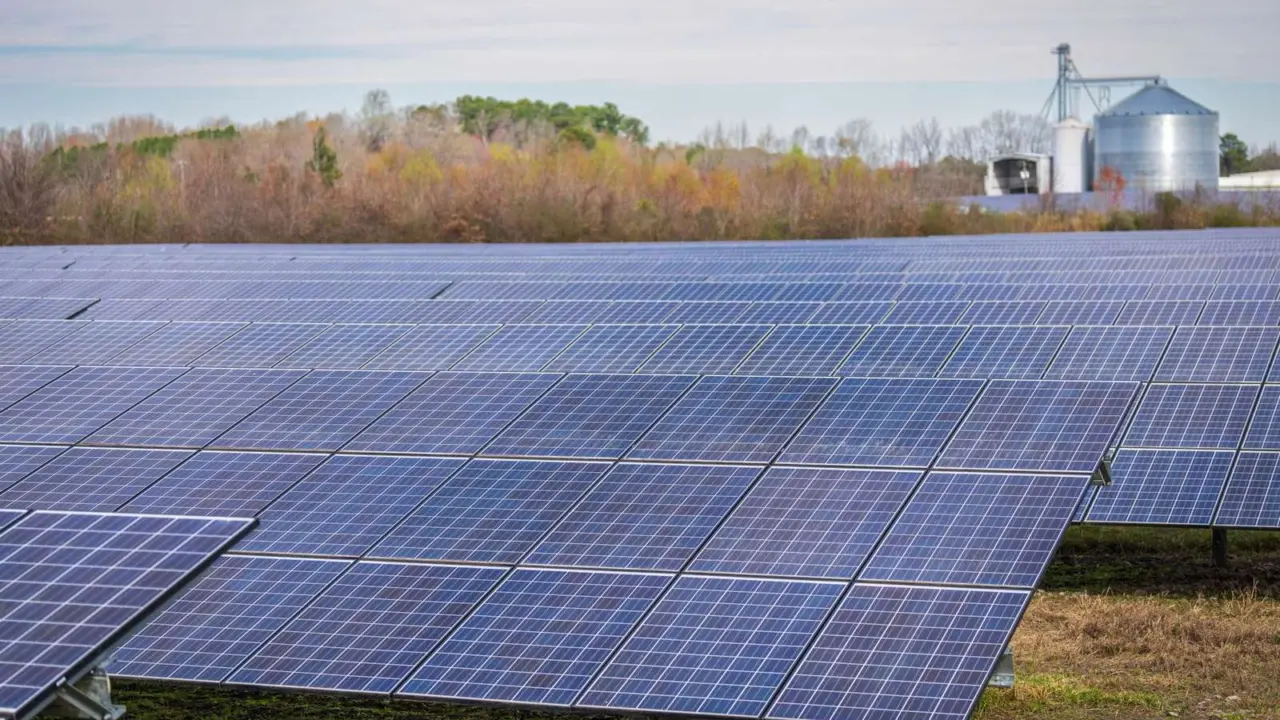
Agrivoltaics is the practice of using the same land for solar power and for farming, whether that means crops, grazing animals or native plants growing beneath and between the panels.
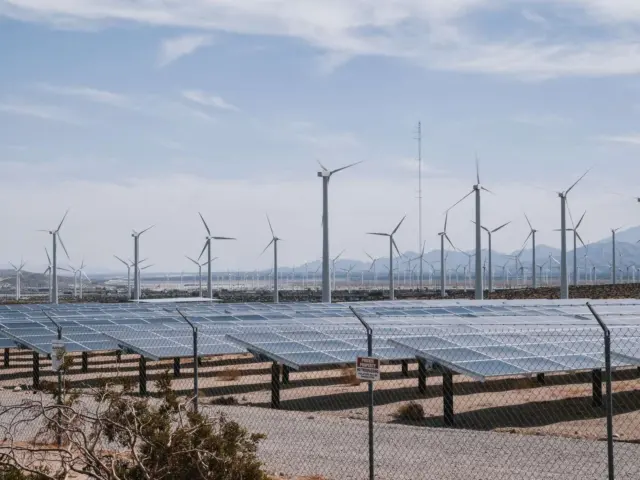
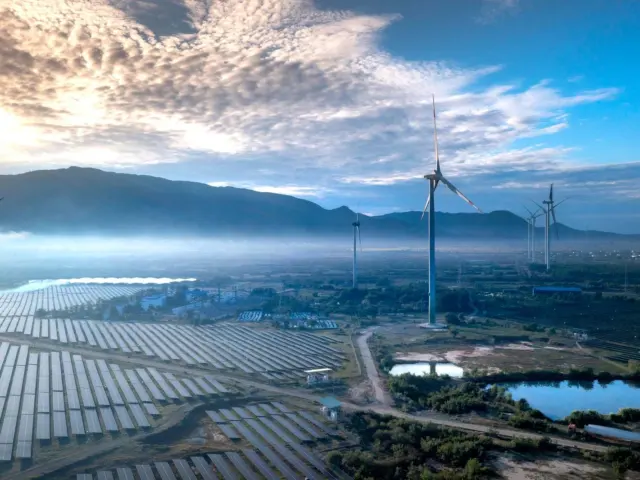
The idea sits within the wider group of renewable energy sources, where each technology uses land in its own way.
What agrivoltaics means in practice
A conventional solar farm clears or mows the ground and keeps farm activity away. Agrivoltaics keeps the land productive instead. Panels are mounted on structures that leave room for something to grow or graze underneath, so one parcel produces electricity and a farm product at the same time.
The U.S. National Renewable Energy Laboratory (NREL) leads a research program on the subject called InSPIRE, short for Innovative Solar Practices Integrated with Rural Economies and Ecosystems. As of the Department of Energy’s August 2022 summary, the program had studied the co-location of solar with crops, grazing cattle or sheep, and pollinator-friendly native plants, and it had supported site design or ongoing research at 28 sites in 11 states, Puerto Rico and the District of Columbia.
The research institute Fraunhofer ISE in Germany describes the motive in terms of competition for land. In its 2021 guideline announcement, a group head at the institute said that dual use reduces competition for arable land and contributes to more efficient land use. That competition is the main reason the approach has drawn attention from farmers, solar developers and regulators.
The main ways panels and farming share a site
Designs differ in how high the panels sit and what lies beneath them. The projects described by NREL and Fraunhofer ISE show several layouts.
- Raised panels over crops. A high mounting structure lets farm machinery pass underneath. The German pilot project at Lake Constance used a five meter high structure over arable fields.
- Crops between rows. Panels sit at a conventional height, and the strips between the rows are planted, so row spacing becomes part of the design.
- Grazing or habitat under standard arrays. Sheep or cattle graze the vegetation, or native flowers and grasses are sown for pollinators.
NREL’s summary of what it calls the five C’s of agrivoltaic success explains why layout matters. One of the five factors covers configuration, technology and design: the choice of solar technology, the site layout and other infrastructure affect everything from how much light reaches the solar panels to whether a tractor can drive under the panels. The other four are climate, soil and environmental conditions; crop selection and management; compatibility and flexibility; and collaboration and partnerships.
Sheep, crops and pollinators
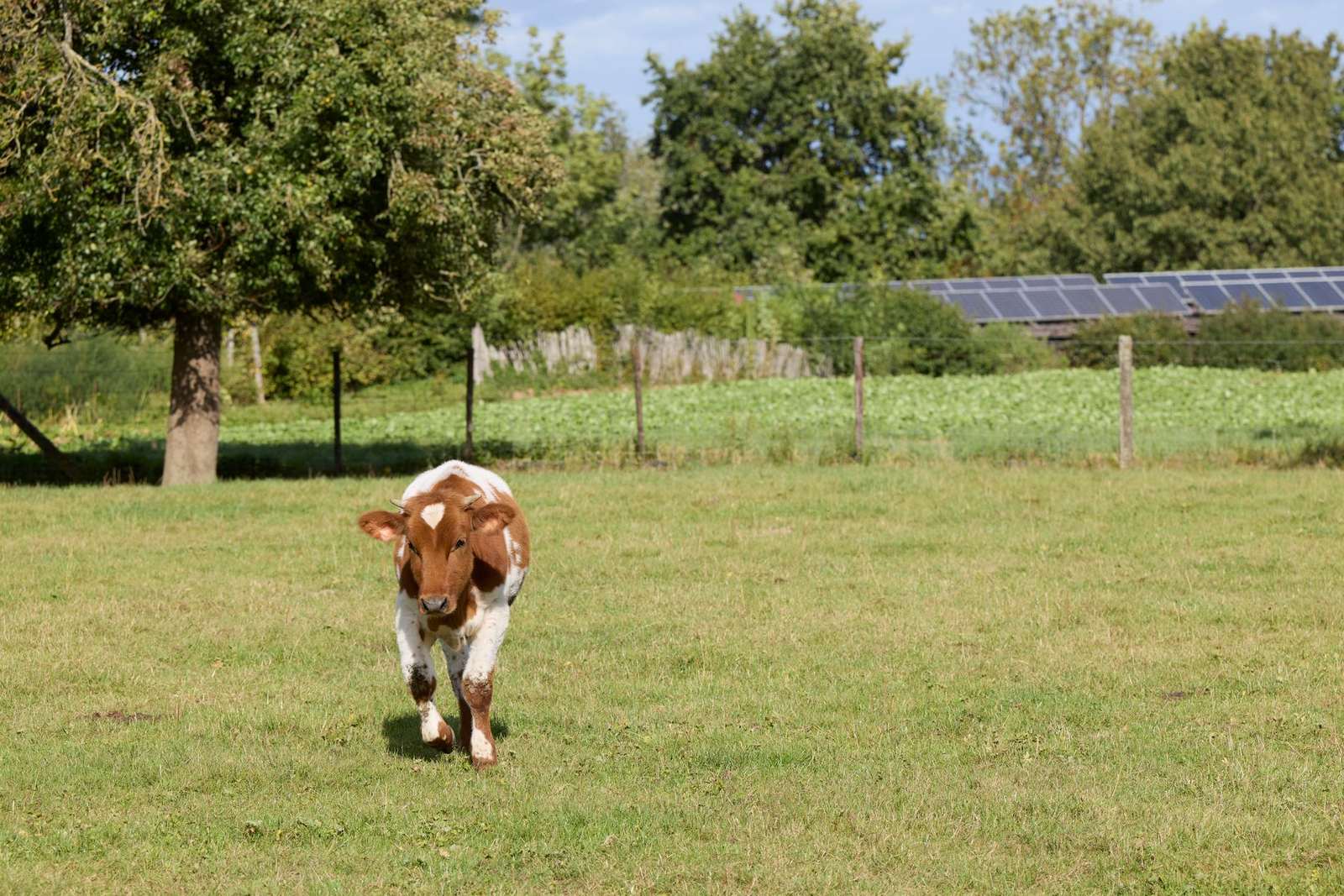
Grazing is one of the forms of agrivoltaics that NREL’s program has studied. A farmer in New York’s Finger Lakes region who directs agrivoltaics for the developer Lightsource bp grazes sheep under solar installations, and the flocks keep the plants beneath the panel rows trimmed, saving the installation’s owner the cost of mowing. She describes the flock as loving to lie under the panels.
Crops depend on light, and panels block some of it. Fraunhofer ISE’s Lake Constance trial measured the effect directly. According to the project’s 2019 report, solar irradiation under the system was about 30 percent less than the reference field, and the shade changed soil temperature and moisture as well. Whether that helps or hurts depends on the crop and the weather.
Native plantings add a third option. NREL’s partner site Jack’s Solar Garden in Colorado is described as the largest commercially active agrivoltaics system in the United States; as of the 2022 NREL feature, its 1.2-megawatt array generates enough power for more than 300 homes, and local nonprofits also use the space as pollinator habitat and to train young farmers.
What the German field trials measured
The best-documented crop trial is the Agrophotovoltaics – Resource Efficient Land Use project, known as APV-RESOLA, led by Fraunhofer ISE on a Demeter farm community at Heggelbach near Lake Constance. In the 2019 project report, the array was described as modules with a total power output of 194 kilowatt installed on one-third of a hectare of arable land.
The first harvest in 2017 gave mixed crop results. Fraunhofer ISE reported that the crop yield of clover grass under the PV array was only 5.3 percent less than the reference plot, while yield losses for potatoes, wheat and celeriac were between 18 and 19 percent. Fraunhofer ISE nonetheless called the first-year results a complete success, because the farm produced a crop and electricity from the same third of a hectare.
The very hot summer of 2018 changed the picture. In the project’s second year, three of the four crops yielded more than the reference field, and the report put celery at a gain of 12 percent compared to the reference, winter wheat at plus 3 percent and clover grass at minus 8 percent. Based on the 2018 potato yield, land use efficiency rose to 186 percent per hectare. The researchers attributed part of the result to the shade helping plants endure heat and drought, and they stressed that trials in other climates and with other crops were still needed.
The 2019 report also stated that the 2017 results showed a land use efficiency of 160 percent. The figures apply to one site, one design and two growing seasons, so they are a measured example and not a general rule for every farm.
Electricity output, cost and scale
Agrivoltaics is not only a farming experiment, since the panels still have to pay their way. In its 2021 announcement, Fraunhofer ISE stated that with electricity generation costs between seven and twelve cents per kilowatt hour, agrivoltaics is already cost-effective today. That statement refers to the German market as of February 2021 and should not be read as a current price for any other country.
The same release put the potential into national terms: about four percent of Germany’s arable land area would be enough to meet the country’s electricity demand on the balance, which the institute equated to ca. 500 gigawatts of installed PV capacity. That is a theoretical ceiling that ignores crop suitability, grid limits and farm preferences, but it shows why planners treat farmland as a major solar resource.
In the United States, the pressure comes from projected solar growth. The NREL feature notes that PV installations are expected to require between 4 and 10 million acres of land by 2050, with some of that land flat, sunny farmland. The Department of Energy’s 2022 summary adds that ground-mounted solar deployment was projected to triple by 2030, which it said would bring many opportunities to increase agrivoltaic practices.
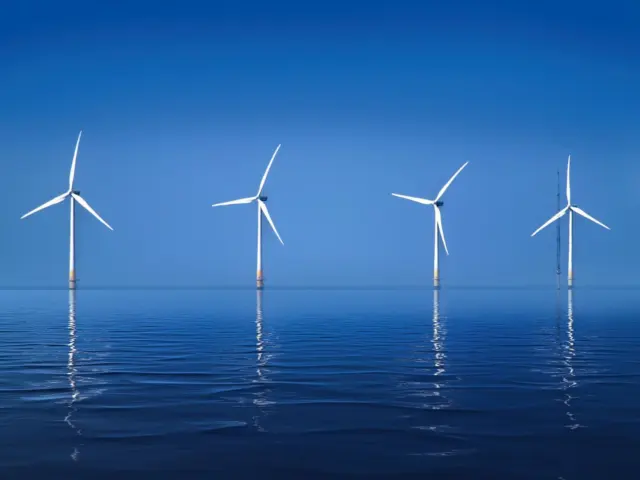
Other renewables approach land differently. Offshore wind power avoids farmland by moving to the sea, and green hydrogen is a route for turning surplus renewable electricity into a storable fuel. Agrivoltaics instead tries to double up on land that already exists.
Trade-offs and open questions
Shade lowers yields for some crops, as the first harvest at Heggelbach showed. Farm and solar goals can also pull apart. NREL’s researchers found that agrivoltaics is not necessarily more expensive than traditional solar development, but it can be more complex, because a farmer or land manager and a solar developer often have very different priorities. Community acceptance matters as well.
Policy can slow projects too. Fraunhofer ISE’s 2021 guideline pointed to German rules as obstacles: under the Renewable Energy Sources Act, most agrivoltaics systems currently do not receive cost-covering feed-in tariffs, and the agricultural use of the land was excluded from EU agricultural subsidies. Rules change over time and differ by country, so a landowner weighing a project needs current local guidance.
Water is another open question. A companion NREL project, PV-SMaRT, studies how solar sites affect runoff, because the soil and vegetation underneath panels can absorb much more water than a paved surface, a finding that could eventually shape drainage rules for new solar sites.
Frequently asked questions
Is agrivoltaics the same as a normal solar farm?
No. A standard solar farm leaves the ground to grass or gravel with no agricultural purpose. An agrivoltaic site is designed around a second use, such as crops, livestock or pollinator habitat, and the panel height and spacing are chosen to suit it.
Which animals graze under solar panels?
NREL’s InSPIRE work covers both cattle and sheep. Its New York example uses sheep, whose grazing keeps the plants under the panel rows trimmed and saves the owner the cost of mowing.
Do crops grow better or worse under panels?
It depends on the crop, the design and the weather. In the Heggelbach trial, clover grass and celery responded differently, and the researchers assumed that shade helped plants endure the hot, dry conditions of 2018. NREL advises choosing crops or ground covers that thrive under panels in the local climate.
Who builds agrivoltaic systems?
Developers, farmers and landowners work together, often with research institutions. NREL’s findings stress that communication and understanding between the groups is crucial to any project’s success.