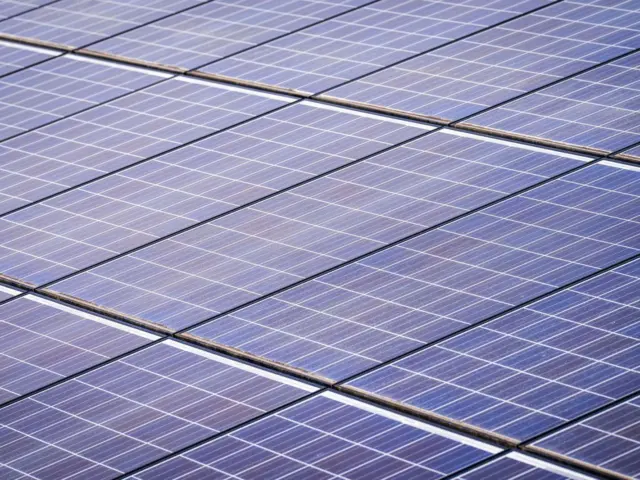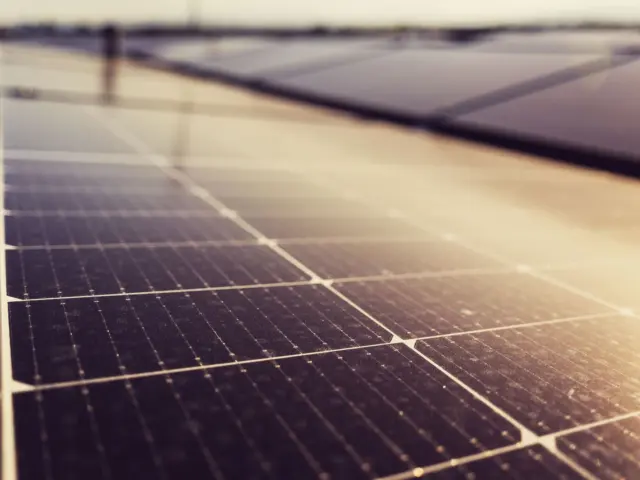
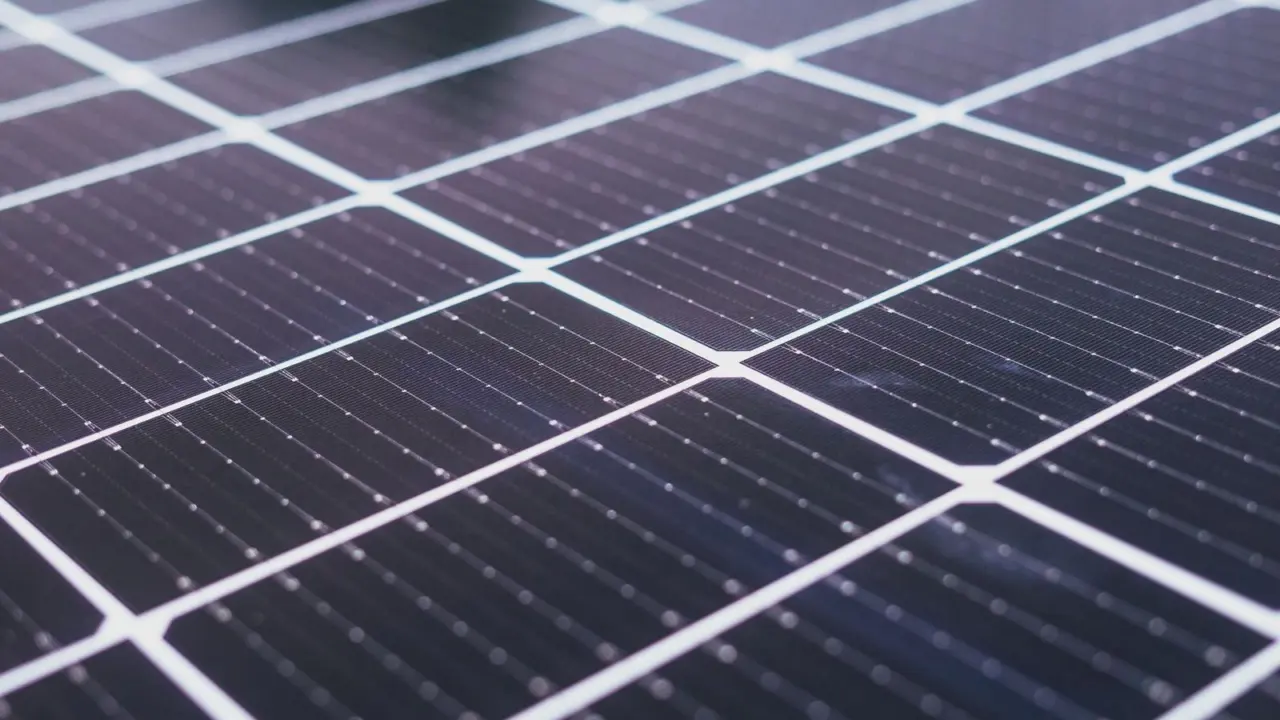
Flexible solar cells are photovoltaic cells thin and light enough to bend, roll or curve around a surface, built from thin-film materials such as gallium arsenide, CIGS, amorphous silicon, organic compounds or perovskites instead of thick silicon wafers.
This guide follows the technology from its history to its uses, and it links to a dedicated page on each major topic, from gallium arsenide solar cells to perovskite solar cells. It is an independent explainer and is not affiliated with Alta Devices, Hanergy or any other maker.
What makes a solar cell flexible
A conventional rooftop panel is a rigid sandwich of glass, a frame and silicon wafers. That design works well on a roof, but it is heavy and cannot follow a curved surface. A flexible cell replaces the wafer with a very thin layer of semiconductor deposited on, or transferred to, a bendable base such as plastic film or thin metal foil. For a plain-language walk through the physics that all of these cells share, see the page on how do solar panels work.
The US National Renewable Energy Laboratory (NREL) described the market gap in a 2018 analysis in Nature Energy. Its researchers noted that silicon panels make up 95 percent of the global solar market, and that thin-film and emerging technologies could instead serve uses where weight and flexibility matter, as reported by Tech Xplore. The same NREL team put the lower limit for a lightweight photovoltaic device at between 300 and 500 grams per square meter, because going below that would reduce reliability, durability and safety.
That weight figure explains why flexibility is more than a convenience. Performance for these products is quantified in watts per kilogram, not only in efficiency or cost per watt. A cell that is slightly less efficient but far lighter can be the better choice for an aircraft or a satellite, where every gram counts. The trade-offs are covered in more detail further down, and the general comparison with ordinary panels sits on the page about thin film vs crystalline silicon solar panels.
The Alta Devices chapter: thin flexible gallium arsenide
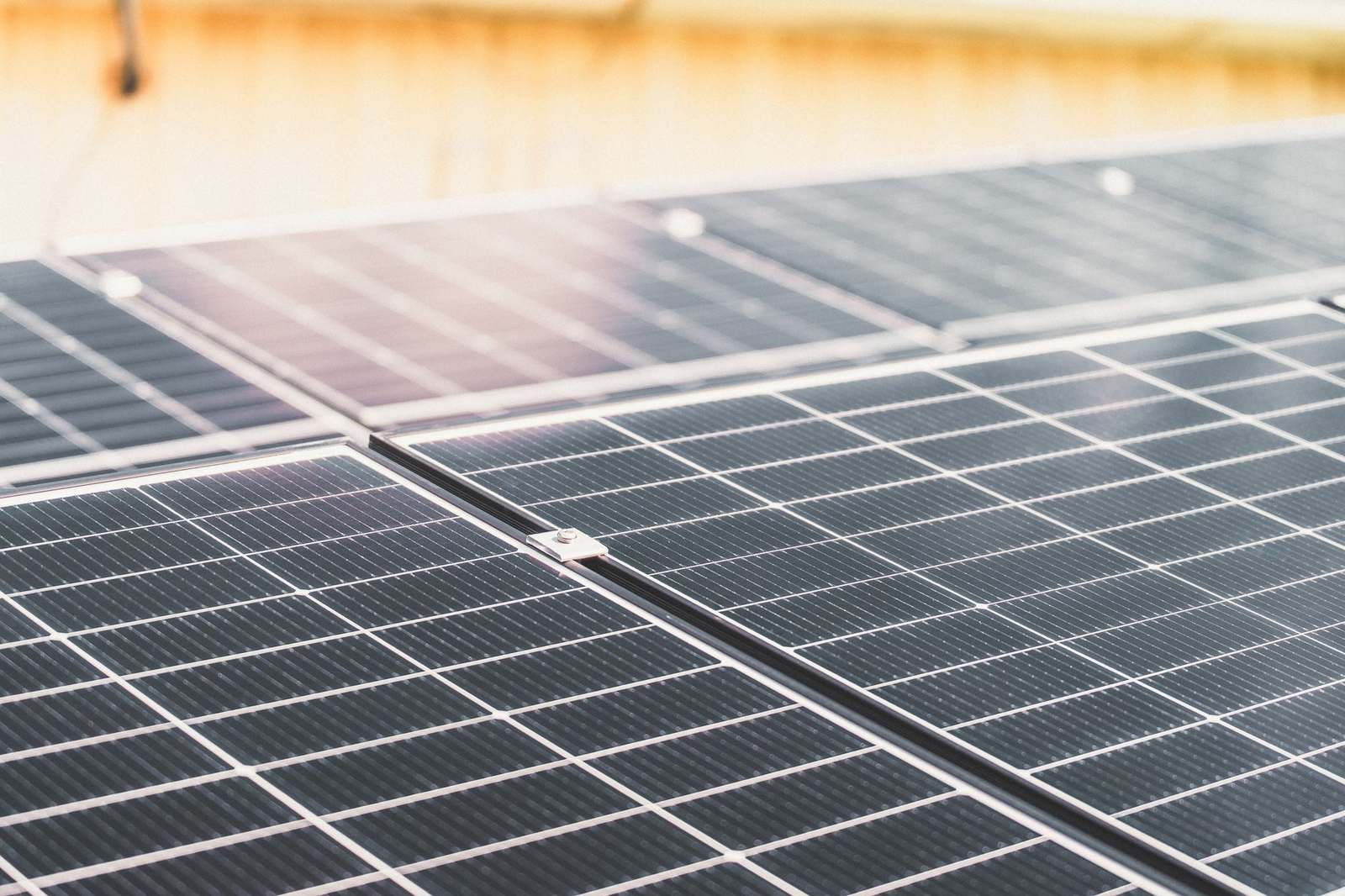
The history of this website’s domain is tied to one of the best-known flexible-cell companies. Alta Devices was a Silicon Valley company founded in 2007, and it built flexible solar cells from gallium arsenide, a compound semiconductor.
According to a 2012 profile in MIT Technology Review, the company was based on the work of two academic researchers, Eli Yablonovitch of the University of California, Berkeley and Harry Atwater of Caltech. Yablonovitch had developed and patented a technique for creating ultrathin films of gallium arsenide in the 1980s. The technique, called epitaxial liftoff, used acid to separate thin films of gallium arsenide from the wafers on which they were grown. The valuable substrate could then be reused several times, which helped make the process affordable.
The profile also explained why gallium arsenide was attractive. Thin films of it captured as many photons as silicon 100 times thicker, and it was less sensitive to heat than silicon. The article noted that gallium arsenide had been used in solar cells on satellites and spacecraft for decades. What Alta Devices tried to change was the cost of turning it into practical solar modules. At the time of that profile, its cells had converted 28.3 percent of sunlight into electricity.
It helps to see how that manufacturing idea differs from ordinary panel making. A silicon wafer is cut from a crystal and stays thick enough to handle. In the liftoff approach the crystal film is grown on a wafer, separated, and mounted on a flexible carrier, so the film itself is the only part that ends up in the product. The same 2012 profile reported that the single-crystal films easily crack, which is why the company had to adapt the technique and find ways to create rugged films, as described by MIT Technology Review.
The Hanergy acquisition
In August 2014, Semiconductor Today reported that Beijing-based Hanergy Holding Group had completed its acquisition of Alta Devices. The report described the company’s process: it fabricated gallium arsenide cells in a micron-thick thin film and lifted that film off the growth substrate, after which the film could be placed on a flexible substrate. The same report gave NREL-certified efficiencies of 28.8% for its single-junction cells and 30.8% for its dual-junction cells, and said the two companies would work on the mobile and wearable tech market.
Records and the UAV pivot
Alta Devices kept pushing the single-junction figure. In July 2018, Semiconductor Today reported that NREL had certified a rise in its gallium arsenide single-junction record from 28.8% to 28.9%, and that the company had set that record five times since 2010. By then the company was aiming its flexible cells at autonomous systems such as unmanned aerial vehicles, a use that has its own dedicated page further down this guide. How such records are measured and certified is explained on the page about each solar cell efficiency record.
The Audi roof project
In August 2017, Audi and Alta Devices announced plans to cooperate on integrating solar cells into the panoramic glass roofs of cars. Semiconductor Today reported that the first prototype was to be developed by the end of 2017, and that the electricity could supply the air-conditioning system and seat heaters. CNBC reported that the thin, flexible cells had an efficiency of over 25 percent. This project was one of the best-known attempts to bring flexible gallium arsenide to ordinary vehicles, and the wider subject of vehicle-integrated photovoltaics has its own page on the solar car roof.
Gallium arsenide cells share one drawback with their space heritage: cost. The 2012 profile called gallium arsenide extremely expensive to use in solar cells, and NREL’s later analysis said that this class of cell, while highly efficient, was too expensive for many applications. That cost gap is a large part of why other flexible technologies matter.
Other flexible solar technologies compared
Gallium arsenide is only one route to a bendable cell. Four other families have been developed as thin films, and each has a different balance of efficiency, durability and cost.
CIGS: copper indium gallium diselenide
CIGS cells are made from a thin film of copper, indium, gallium and selenium. The US Department of Energy notes that laboratory-scale CIGS cell efficiencies have exceeded 20%, while commercial CIGS modules typically have efficiencies between 12% and 14%. NREL lists CIGS, together with cadmium telluride, perovskites and other new technologies, among the thin films that could power drones, portable chargers and building facades. A CIGS cell on flexible stainless steel, made at NREL, appeared in that analysis.
Amorphous silicon
Amorphous silicon was the first of the commercial thin-film silicon cells. A paper from Photovoltaics International, written by researchers from United Solar Ovonic, NREL and several universities, states that the first commercial thin-film silicon solar cell used a single-junction amorphous silicon structure, and that such cells can also be deposited on flexible substrates so the laminates can be used in building-integrated photovoltaic structures. The paper also notes that a light-induced degradation effect still persists in this material. Its low material cost is the draw, and that light-induced degradation is one of its limits.
Organic photovoltaics
Organic cells use molecular or polymer absorbers instead of an inorganic crystal. The Department of Energy lists the ability to apply them to flexible substrates as one of their benefits, and notes that various absorbers can make colored or transparent devices, which suits building-integrated products. The same page says organic photovoltaics have achieved efficiencies near 11%, but that efficiency limits and long-term reliability remain significant barriers, and that the operational lifetime of organic modules remains significantly lower than for inorganic devices.
Perovskites
Perovskites are a family of materials that can absorb light very effectively in a thin layer. The Department of Energy reports that perovskite-silicon tandem cells have reached efficiencies of almost 34%, and that the main challenges are cell stability and durability, efficiency at scale, manufacturability and bankability. The material and its open durability questions are covered on the dedicated perovskite page linked in the introduction.
On flexible plastic substrates specifically, pv magazine reported in September 2025 that Renshine Solar said it had reached 27.5% efficiency for a flexible all-perovskite cell, a result the company described as a world record for that cell type. Devices in the study retained over 97% of their initial efficiency after 10,000 bending cycles at a 10 mm radius. These are the company’s own reported figures, and they describe laboratory cells, not long-term field performance.
Side by side
| Technology | Typical flexible form | Efficiency figure reported | Main limitation |
|---|---|---|---|
| Gallium arsenide (single junction) | Micron-thick film lifted off its wafer | 28.9% certified record (2018) | High cost to make |
| CIGS | Thin film, for example on flexible stainless steel | 12% to 14% in commercial modules | Gap between lab and module efficiency |
| Amorphous silicon | Laminates on flexible substrates | Efficiency gains still being sought | Light-induced degradation |
| Organic | Applied to flexible substrates | Near 11% | Shorter operational lifetime |
| Flexible all-perovskite | All-perovskite film on flexible substrates | 27.5% claimed for a cell | Stability and durability |
Figures in the table come from the US Department of Energy organic photovoltaics page and the 2018 Semiconductor Today report on the gallium arsenide record, with the CIGS and perovskite rows drawn from the sources cited above.
Where flexible solar cells are used
NREL named the high-value markets for lightweight photovoltaics in its 2018 analysis, and each maps onto a group of uses that these technologies have been pursued for.
Aircraft: UAVs and high-altitude platforms
For aerospace and unmanned aerial vehicles, the analysis noted that there is an increasing desire to keep drones aloft for very long periods, and that limited surface area makes efficiency and weight critical while cost is secondary. That reasoning is why gallium arsenide, despite its price, drew interest from drone makers. The page on solar powered drones goes through how small aircraft use wing-mounted cells, and the longer-endurance aircraft known as high altitude pseudo satellites are covered on their own page.
Satellites and spacecraft
Spacecraft are the original home of high-efficiency cells, and weight and packing volume still drive design there. NASA noted in 2017, when the Roll Out Solar Array experiment was deployed by the International Space Station’s robotic arm on June 18, 2017, that traditional solar panels used to power satellites can be bulky with heavy panels folded together using mechanical hinges, while the new design rolls up into a compact cylinder with significantly less mass and volume. NASA later reported that the design has been integrated into commercial satellites. This is flexible mechanical packaging more than a flexible cell, but it shows the same priority on low mass. The cell side of the story is on the page about space solar cells.
Vehicles
Ground transportation is the next NREL market. The analysis said that putting photovoltaics on electric vehicles will compete with electricity from the grid, but that the addition could extend the driving range, and that the panels would need to be small and flexible enough to conform to the contours of a roof. The Audi project described above followed this logic.
Portable and wearable power
Portable charging is the market that remains. The 2018 NREL analysis said that making it easy for a person to install or move a portable charger drives the need for efficient and flexible photovoltaics, with users such as the military, disaster relief workers and recreational users. Hanergy’s 2014 plans for Alta Devices also named mobile and wearable tech. For consumer-level guidance on foldable and roll-up chargers, see the page on portable solar panels.
How to read efficiency claims for flexible cells
Headline numbers for flexible cells are easy to misread, because the same technology can show very different figures depending on what was measured. A few distinctions do most of the work in telling them apart.
The first is laboratory cell against finished module. The CIGS figures earlier in this guide show the gap between a laboratory cell and a commercial module made from the same material. A small record cell is a statement about what the material can do under ideal conditions, not about what a roll of product delivers.
The second is certified against self-reported. The Alta Devices efficiencies above were described as certified by NREL, which is an independent laboratory. In the perovskite case, pv magazine reported that Renshine Solar said it had achieved a record 27.5% for a cell, while the panel built with the same approach had a certified efficiency of 23.0%. Both numbers can be true at once, because a cell and a larger panel are different things.
The third is peak efficiency against lifetime performance. Efficiency figures are measured on new devices. For organic and perovskite cells in particular, the open question is how long output holds up, which is why the Department of Energy keeps pointing to lifetime and reliability work for both. A bending test is a useful sign of mechanical toughness, but it is not a substitute for years of outdoor exposure.
Weight claims deserve the same care. A product advertised as lightweight can only be compared fairly with another if both numbers cover the whole package, including the encapsulation that protects the cell. The NREL lower limit of between 300 and 500 grams per square meter for a lightweight device is a reminder that protective layers add mass, and that going below the limit costs durability.
Trade-offs: efficiency, durability and cost
A few questions decide whether a flexible cell fits a job. The first is power per area: the page on solar panel efficiency explains what a percentage means in practice, and why a smaller roof or wing area can favor a higher-efficiency cell. The second is power per weight, which is where flexible cells earn their place in aerospace.
Durability is the next question. The Department of Energy lists stability and durability as the first challenge for perovskites and reliability as a barrier for organic cells, as quoted above, and the amorphous silicon paper notes that light-induced degradation persists. Rigid silicon panels have decades of field history behind them; the page on solar panel lifespan covers how output declines over time for conventional modules, a baseline that most flexible technologies are still being measured against.
Cost is the final constraint. NREL’s analysis suggested that these technologies would first enter niche, premium-paying markets, and that as production increases, lower costs will follow. For readers comparing the whole field of low-carbon supply, flexible photovoltaics sit within the broader picture of renewable energy sources, and the household side of solar is covered in the guide to home energy savings.
Frequently asked questions
Are flexible solar cells as efficient as rigid panels?
It depends on the material. Gallium arsenide held the single-junction record of 28.9% in 2018, according to Semiconductor Today, while the Department of Energy puts commercial CIGS modules at between 12% and 14%. Weight and shape, not only efficiency, decide which type suits a job.
What did Alta Devices make?
Alta Devices was a company founded in 2007 that made thin, flexible gallium arsenide solar cells. Hanergy completed its acquisition of the company in August 2014, as reported by Semiconductor Today.
Which flexible solar technology is the most durable?
Sources cited in this guide point to stability as an open question for perovskites and to shorter operating lifetimes for organic modules. Gallium arsenide has a long heritage on satellites and spacecraft, according to MIT Technology Review.
Can flexible solar cells charge an electric car?
Vehicle roofs have only a small surface area. The Audi project reported in 2017 aimed to power systems such as air conditioning and seat heaters, with direct battery charging possible at a later stage.
What are the main uses of flexible solar cells?
NREL identified aerospace and unmanned aerial vehicles, portable charging and ground transportation as the high-value markets in its 2018 analysis.