Community solar lets households and businesses subscribe to a share of an off-site solar array and receive a credit on their electric bill, without putting panels on their own roof. It suits renters and homes with shaded or unsuitable roofs.
It is one of several routes to clean electricity covered in the guide to renewable energy sources. This page explains how the arrangement works, who it is built for, how bill credits are calculated, where it is available in the United States and what the official guidance says to look for in a subscription.
Community solar subscriptions explained
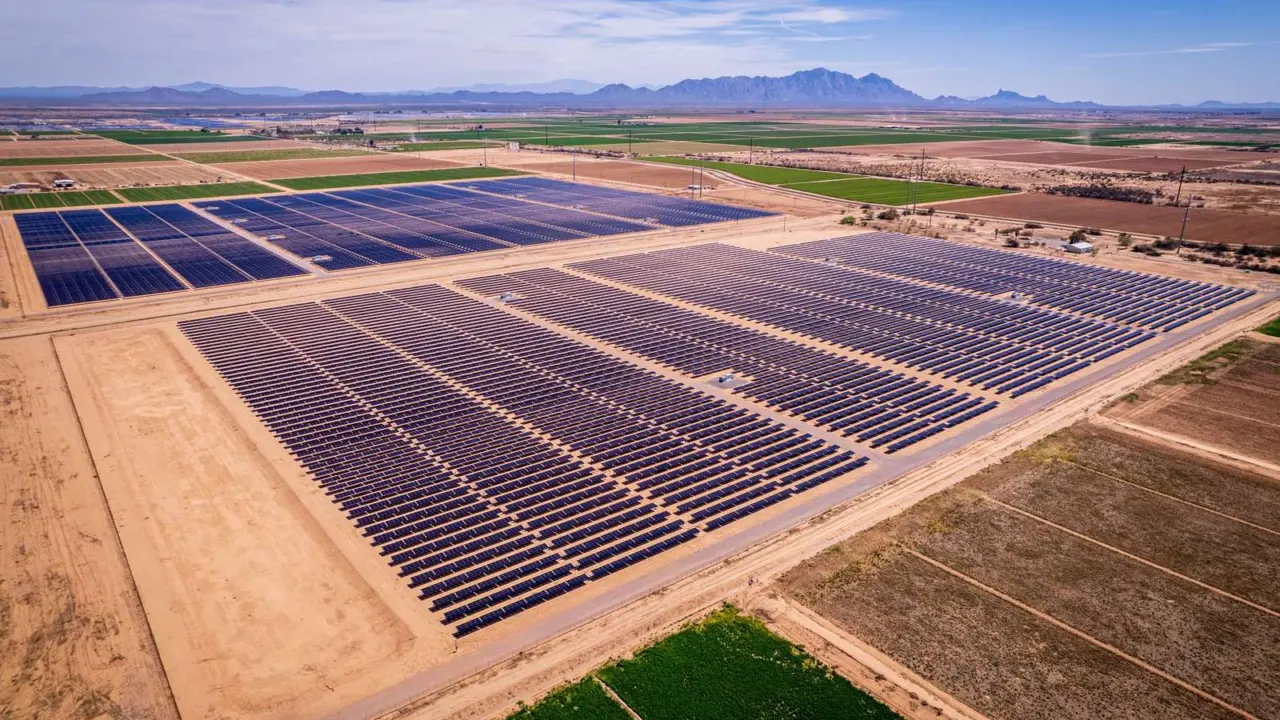
The U.S. Department of Energy (DOE) defines community solar as any solar project or purchasing program, within a geographic area, in which the benefits flow to multiple customers such as individuals, businesses, nonprofits and other groups. In most cases the panels sit at an off-site array, and customers typically subscribe to, or in some cases own, a portion of the energy it generates.
The electricity itself does not travel to a subscriber’s home. According to the same DOE page, the project generates power that flows through a meter to the utility grid, and the local utility pays the community solar provider for the energy generated. Each subscriber then receives a portion of the dollar value generated by their subscription as a credit, typically applied directly to the monthly electric bill. In exchange, subscribers pay for a share of the project, which the DOE says is typically a monthly subscription fee.
The result is a two-part arrangement: a credit that reduces the bill and a fee that is paid to the project operator. Whether a subscriber comes out ahead depends on how the credit compares with the fee, which differs by programme and contract. The terms of each offer therefore matter more than the label.
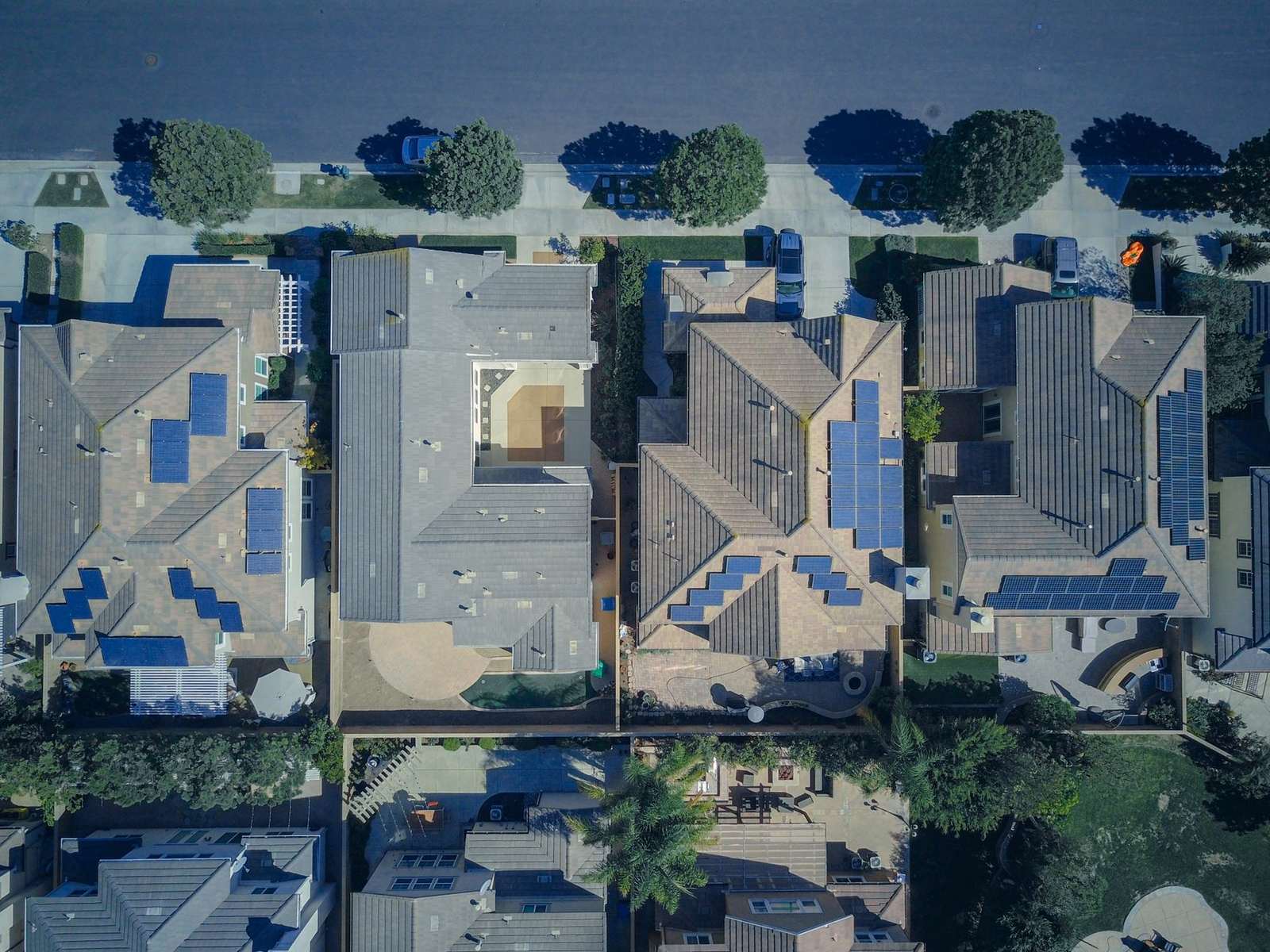
Households community solar is designed for
The DOE describes community solar as an option for people who are unable to install solar panels on their roofs because they are renters, cannot afford a system, or have roofs or electrical systems that are not suited to solar. A 2024 study by the U.S. national laboratory that tracks the market put numbers on the gap. The lab, which the Energy Department renamed on December 1, 2025 from the National Renewable Energy Laboratory (NREL) to the National Laboratory of the Rockies (NLR), found that 42% of households and 44% of businesses are unable to use behind-the-meter solar, meaning panels attached to their own premises.
Several everyday situations fall into that group:
- Renters, because the DOE lists not owning a home as a reason a household cannot host panels.
- Homes with a poor roof, because roof conditions such as shading or roof size may not support a rooftop photovoltaic system.
- Households for whom upfront cost is the barrier, because the DOE names cost as a reason rooftop solar is out of reach.
Moving home is a practical concern for subscribers. NLR notes that participants who move within the same utility service territory or county can typically retain their share, and some programmes allow subscriptions to be sold or donated.
Bill credit mechanics
For an off-site array to lower a bill at another address, the utility’s billing rules must allow it. NLR explains that virtual net metering, also called remote net metering, allows customers to receive bill credits for generation from an off-site solar energy system, and that some form of it must exist for community solar to work. The idea is a close relative of net metering, which credits owners of on-site systems for the power they send to the grid.
Not every programme uses the same mechanism. The NLR page lists net metering, value of solar tariffs, group billing and joint ownership as ways participants can be credited, and adds that programme designs vary by type of bill credit (usually kilowatt-hours or dollars), contract length, cost of participation, financing options, eligibility, number of participants allowed and products offered. A credit expressed in kilowatt-hours behaves differently from one expressed in dollars when electricity rates change, which is one reason two neighbouring programmes can deliver different results.
NLR also lists greater electricity rate stability and potential bill savings among the benefits that well-designed projects can offer participants. The word “potential” matters: savings are a design outcome, not a guarantee.
Ownership models and who runs the array
Community solar projects can be owned by utilities or third-party developers and can be sited on public buildings, private land, brownfields and other suitable areas. NLR groups the common arrangements as follows.
| Model | How it is organised |
|---|---|
| Utility-sponsored | The utility owns or operates the array, and its customers may voluntarily participate. |
| Special-purpose entity | Individuals come together to form a business enterprise to develop the project. |
| Nonprofit | A nonprofit entity administers the project to benefit members or donors. |
The models above are taken from the NLR community solar overview.
The model affects who answers questions about billing, who holds the contract and what happens if the project changes hands. The DOE adds that in states without enabling legislation, non-regulated utilities or municipal utilities may develop their own community solar programmes, so a subscription can exist even where no state law has set the rules.
Availability across the United States
As of June 2025, NLR reports that community solar projects are located in 43 states and the District of Columbia, with more than 11 GW-AC of total installed capacity. The market is concentrated: about 75% of it sits in four states, Florida (3,873 MW-AC), New York (2,410 MW-AC), Massachusetts (1,054 MW-AC) and Minnesota (932 MW-AC).
Policy is a large part of the reason. As of February 2025, NLR counts 24 states and the District of Columbia with policies that enable community solar, and 20 of those include provisions for low- and moderate-income households. A state with enabling rules and a programme that is open for enrolment looks very different from one with a single utility pilot, so availability is a question about a specific utility territory rather than a whole state.
The DOE says consumers can contact their local electric utility or use an internet search to find subscriptions available in their area, and that the signup process depends on the state and the programmes available. NLR publishes a dataset of state policies and programmes that records whether each programme is active or ended and whether it has set-asides for low-income customers. This guide covers the United States only; programme rules in other countries are different and are not described here.
A closer look at one state: Minnesota
Minnesota shows how programme design shapes outcomes. A December 2024 Minnesota House Research Department brief explains that the legislature mandated Xcel Energy’s community solar garden programme in 2013 and that more than 30,000 residential customers and 3,700 businesses participate in it. Under the programme, the utility must buy all the electricity a garden generates at a rate set by the Minnesota Public Utilities Commission and issue bill credits to subscribers based on the size of their subscription.
The same brief records a concern about who benefits. It reports that commercial and industrial customers represented just 10 percent of unique subscribers as of 2023, yet accounted for 84 percent of capacity and received 82 percent of all bill credits. It also reports that in 2023 Xcel estimated the programme had increased the average residential electric bill by approximately $54 a year, a cost spread across customers who did not subscribe. That is the utility’s own estimate as reported by the legislature’s research staff, and the brief presents it as one side of a debate about programme costs.
The legislature responded with new rules for gardens approved from 2024. As of the brief’s December 2024 publication, the Minnesota Department of Commerce, not the utility, now administers those gardens, no single subscriber may reserve more than 40 percent of a garden’s capacity, and the department may approve a garden only if at least 30 percent of its capacity is subscribed by low- and middle-income subscribers. The lesson is general: community solar rules decide who can join, who pays and how fast a market grows.
DOE best-practice guidance for subscriptions
As of November 2026, the DOE page lists consumer protections it considers best practice. These are guidance, not requirements in every state, and the DOE tells subscribers to check their own state’s requirements and review contracts before they subscribe. The best-practice list includes:
- A bill credit that delivers at least 20% household savings.
- No exit fees, termination fees, sign-up fees or other fees in the contract.
- Plain-language disclosure documents provided upfront, in the subscriber’s primary language.
- An accessible complaint process for subscribers.
Reading these items together shows what the main risks are: a credit that is smaller than the fee, charges that appear when leaving, and terms that are hard to understand. Programmes designed for low-income households, the DOE adds, all require subscribers to achieve energy savings.
Community solar is a way of sharing electricity generation. It differs from green hydrogen, which uses renewable electricity to make a fuel rather than to credit a customer’s bill.
Frequently asked questions
Do community solar subscribers need to install anything?
No equipment is installed at the subscriber’s home. The DOE explains that the array is usually off site and the benefit arrives as an electric bill credit.
Is the electricity delivered directly to a subscriber’s home?
No. The project feeds the utility grid through a meter, and the utility pays the provider for that energy. The subscriber’s share appears as a credit on the monthly bill.
Can a subscription move with a household?
It depends on the programme. NLR says participants who relocate within the same utility service territory or county can typically keep their share, and some programmes allow selling or donating a subscription.
Are savings guaranteed?
No. NLR describes bill savings as a potential benefit that depends on design, and the DOE recommends reading contract terms closely. Any specific saving depends on the programme, the credit type and the fee in the contract, so no general figure applies.
Is community solar available everywhere in the United States?
No. As of June 2025, NLR reports projects in 43 states and the District of Columbia, with most capacity concentrated in four of them. Availability depends on state policy and the local utility territory.