Net metering is a billing arrangement that credits a customer with onsite solar for the electricity sent to the grid, so exports offset the power drawn from the grid later. Terms are set by each utility and regulator.
Net metering is one of the policies that decides how rooftop solar owners are paid for exports, and it sits within the wider picture of renewable energy sources and how households connect to them.
How net metering works
A home with solar panels rarely uses electricity at the same moment the panels produce it. At midday the array may generate more than the household needs, and at night it generates nothing. Net metering handles that mismatch on the bill. According to the U.S. Energy Information Administration (EIA), writing in May 2012, net metering tariffs let customers use the electricity they generate in excess of their consumption at certain times to offset their use of electricity from the grid at other times.
The U.S. Department of Energy describes the arrangement as one between solar energy system owners and utilities, in which owners are compensated for solar generation exported to the grid. In its homeowner’s guide to going solar, the department notes that the name derives from the 1990s, when the electric meter simply ran backwards during exports, and that the picture is rarely that simple today.
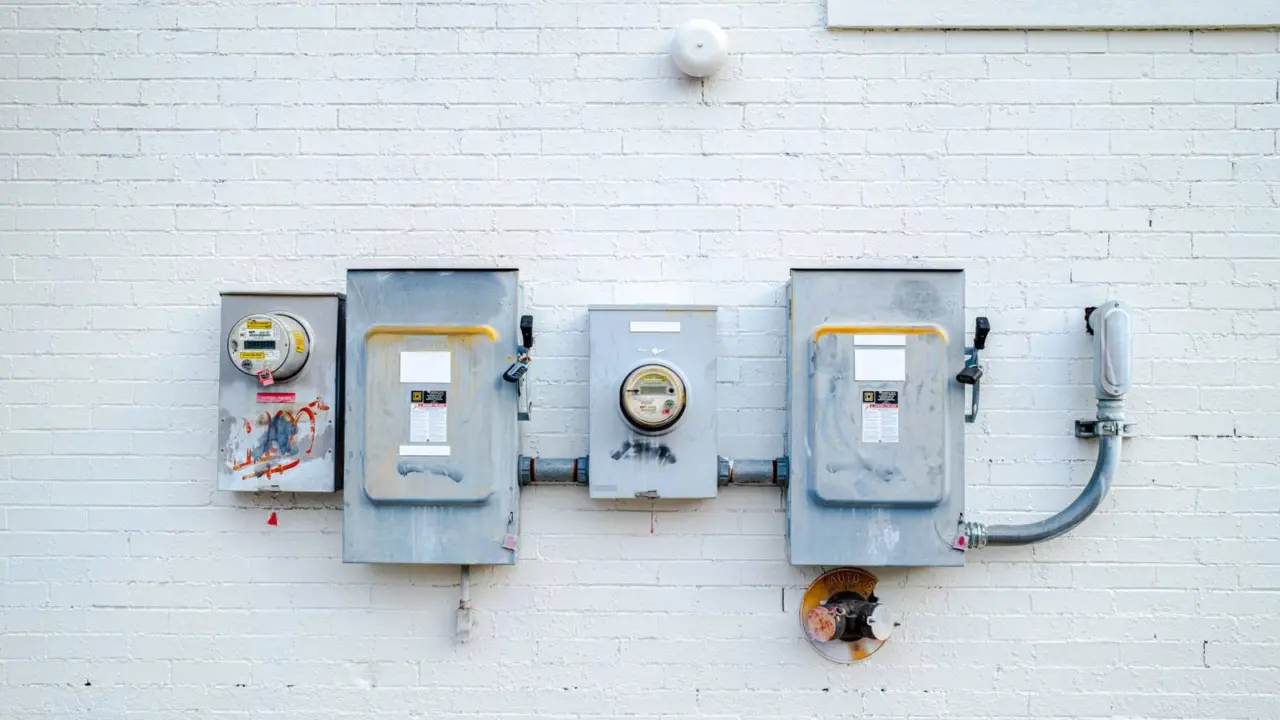
The metering hardware matters because the utility must measure flows in both directions. EIA’s April 2019 analysis of net-metered wind explains that net metering involves a bidirectional electric meter that measures both the electricity a customer draws from the grid and the excess onsite electricity that goes back to it. Generation is classed as net metered when it is netted, meaning subtracted from the customer’s usage, on the utility bill.
The arrangement in practice differs by jurisdiction. In some U.S. states, EIA reported in 2012, customers have a single meter that spins backwards when they generate more than they consume, while other states require two meters, one for total consumption and one for total generation. On installation, the Department of Energy’s guide says the best way to install solar is through a qualified professional who holds a certification to do so, so meter and wiring changes are work for qualified professionals working with the utility, not a household project.
Net metering, net billing and buy-all, sell-all
Net metering is one of several ways to pay owners of small generators. The national laboratory NLR, in its overview of energy compensation mechanisms, separates three metering and billing arrangements, and regulators in each place decide which are offered.
| Arrangement | Self-used solar power | Exported power | Banking of credits |
|---|---|---|---|
| Net energy metering | Valued at least at the retail rate | Credited in kilowatt-hours against later use | Credits can offset the current or future billing cycles |
| Net billing | Valued at the retail rate | Credited at a set sell rate, often tied to avoided cost | Not typically allowed within a billing cycle |
| Buy-all, sell-all | Not allowed to offset purchases | All generation sold at a standard sell rate | Not applicable |
The table summarizes NLR’s description of compensation mechanisms for distributed generation, published on NLR’s energy compensation page.
In NLR’s definition of net energy metering, the owner exports excess energy and receives a credit in kilowatt-hours, which can offset consumption in the current billing cycle or in later cycles. Because of that, every kilowatt-hour produced, whether self-consumed or exported, is valued at a minimum at the retail rate the owner would otherwise pay.
Net billing works differently. The owner consumes solar output as it is generated and exports the surplus, but NLR states that banking kilowatt-hours within a billing cycle is not typically allowed. Exports are instead metered and credited at a predetermined sell rate, so excess energy is typically compensated at a lower standard sell rate than the retail rate.
Under a buy-all, sell-all arrangement, the household buys all its electricity at the retail rate and sells everything its system generates at a standard sell rate. NLR notes that this rate is typically set at the utility’s avoided cost but may be higher where regulators recognise extra value to the grid.
What an avoided-cost sell rate means
Many net billing tariffs rest on avoided cost. NLR defines a utility’s avoided cost rate as the amount the utility would have to pay to generate the power itself or purchase from another source if it were not buying electricity from the distributed generation owner. At a minimum it reflects the price of wholesale power, and it often includes demand savings or other benefits to the utility.
Time-of-use rates add another layer. NLR reports that many utilities now require new distributed generation owners to take a time-of-use rate, which means exported electricity is compensated at the rate applying when the generation occurs. Output at times of high demand can be worth more than output at off-peak times. A value-of-solar tariff is a further variant: a sell rate designed to reflect the value of the electricity to the utility or society.
Some utilities try to balance encouragement for solar against concerns about shifting costs onto customers without solar. NLR describes a hybrid approach, a sell rate below the retail rate but high enough to encourage investment, and another strategy of retail-rate compensation combined with a monthly service charge that recovers the utility’s fixed costs for serving the owner.
How rules differ across U.S. states
The United States has no single national net metering rule. The U.S. Department of Energy says whether a system qualifies for net metering payments depends on policies and practices in the state and electric utility, and its guide points readers to the local utility for information on eligible system size, customer type, rates and the design of bill credits.
EIA’s 2012 article lists some of the ways states vary:
- Technology. States may name which generator types are eligible, and in Florida, EIA noted in 2012, solar panels were eligible while landfill gas generators were not.
- Capacity limits. Most states cap the size of an eligible generator. In 2012 these ranged from the tens of kilowatts to a few megawatts, and ran as high as 80 megawatts in New Mexico, while Colorado, Arizona, Ohio and New Jersey had no capacity limit.
- Aggregate caps. As of 2012, California allowed utilities to decline net metering applications if net-metered energy would exceed 5% of the utility’s total retail sales from the previous year.
- Compensation. EIA stated that customers typically receive retail prices for the electricity they generate under net metering, because they are charged only for net usage, while in some states customers receive wholesale prices, which are lower, for excess generation.
These details were reported in EIA’s May 2012 Today in Energy article and have since changed in many places, so they illustrate the kinds of variation rather than describe current rules. EIA points readers to the Database of State Incentives for Renewables and Efficiency (DSIRE) for each state’s policies.
Fees also shape outcomes. NLR notes that many utilities charge distributed generation owners monthly administrative or standby fees, as well as one-time application, interconnection, inspection or meter fees, which can reduce savings and lengthen the time to recover the investment.
EIA reported that 15,800 MW of net-metered solar photovoltaic systems were available across 1.7 million installations in 2017, in its April 2019 article.
California: from net metering to net billing
California shows how a policy can change while the label stays familiar. In an EIA analysis dated July 2024, the agency reported that in April 2023 California revised how households with rooftop solar are compensated. The new structure, a net billing tariff (NBT), offers a variable compensation rate, with the reimbursement rate varying through the day according to when the solar electricity is generated.
EIA explained that this rate is, on average, less than the earlier structure known as net energy metering 2.0 (NEM 2.0), which credited generators at a flat retail electricity rate. A later EIA piece, dated October 2026, adds that the earlier program was available through April 2023, offered higher export compensation than the net billing tariff, and that capacity built under it was grandfathered in. Systems that qualified under the older terms therefore kept those terms.
EIA’s July 2024 analysis also linked the change to storage. Because the variable rate rewards sending power to the grid in high-demand hours, typically the evening, batteries became more attractive. EIA reported that in April 2024 more than 50% of residential solar installations in the state were paired with battery storage, compared with just over 20% in October 2023. For more on how batteries work with solar, see this guide to battery energy storage.
The California example is a snapshot taken from EIA’s reporting as of its two publication dates. Tariff details, eligibility and export rates are set by the California Public Utilities Commission and the utilities, and can change after those dates.
The Smart Export Guarantee in Great Britain
Great Britain uses a different model. Ofgem, the energy regulator, states on its Smart Export Guarantee page that the scheme launched on 1 January 2020 and is a government-backed initiative. It requires some electricity suppliers, known as SEG licensees, to pay small-scale generators for low-carbon electricity exported to the National Grid.
As of November 2026, Ofgem’s pages describe these features:
- SEG licensees determine the rate, contract length and other terms, and SEG tariff rates must always be above zero.
- Payments are calculated using export meter readings.
- Eligible technologies include solar photovoltaic, wind, hydro, anaerobic digestion and micro combined heat and power, up to a capacity of 5MW, or 50kW for micro-CHP, in installations located in Great Britain.
- A generator can apply to any SEG licensee, and Ofgem’s guidance for generators says the licensee does not need to be the same company as the current energy supplier.
Under the scheme, the supplier that is the SEG licensee sets the price paid for exported electricity. Ofgem advises generators to shop around to see which tariff is best for their circumstances.
Where storage and shared solar fit
Export credit design affects what pairs well with a rooftop system. In California, EIA observed more solar installations paired with batteries after the net billing tariff took effect, because batteries enable customers to send electricity to the grid during hours when demand is relatively high.
Households that cannot host panels on their own roof may still take part in solar through shared arrays, which are covered in the guide to community solar.
Overall, EIA’s October 2026 analysis estimated that generation from small-scale solar systems (under 1 megawatt) in the United States grew from 18,812 gigawatthours to 92,979 gigawatthours over the last decade, with California accounting for 37% of the 2025 total, as reported in EIA’s October 2026 article. EIA states that changes in different programs supporting rooftop solar partly explain the jump in generation in 2022.
Frequently asked questions
Does net metering mean the meter literally runs backwards?
Sometimes, but not always. The U.S. Department of Energy says the name comes from the 1990s, when the meter ran backwards during exports, and that it is rarely that simple today.
Is net metering the same everywhere?
No. Rules depend on the country, state and utility. In the United States, eligibility, system size limits and credit design vary by state and utility, and Great Britain uses the Smart Export Guarantee, which pays only for exported electricity.
What is the difference between net metering and net billing?
Under net metering, exports earn kilowatt-hour credits that can offset later use. Under net billing, exports are credited at a set sell rate, often reflecting avoided cost, and banking within a billing cycle is not typically allowed, according to NLR.
Do I need an electrician to connect panels to the grid?
The Department of Energy says the best way to install solar is through a qualified professional who holds a certification to do so. The Department of Energy also points to the local electric utility as a good place to source information on net metering in a service area.
Where can I find the current rules for my area?
The local utility and the state or national regulator publish the current tariff. In the United States, EIA points to the DSIRE database for state policies, and in Great Britain Ofgem lists the current SEG licensees.