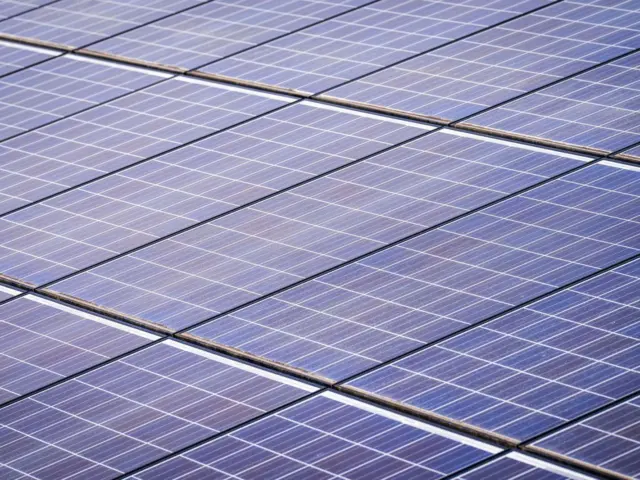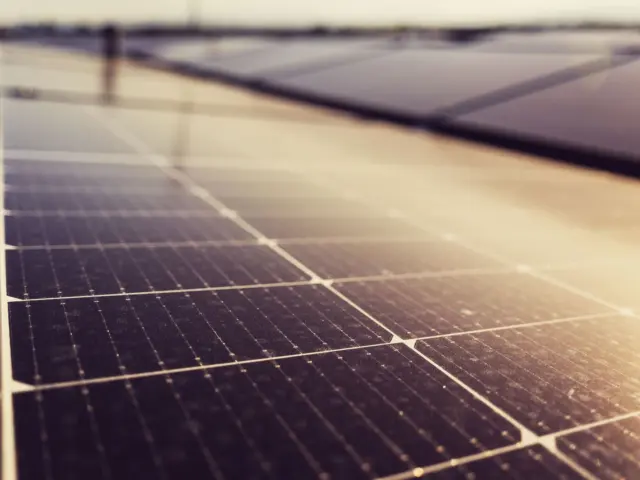
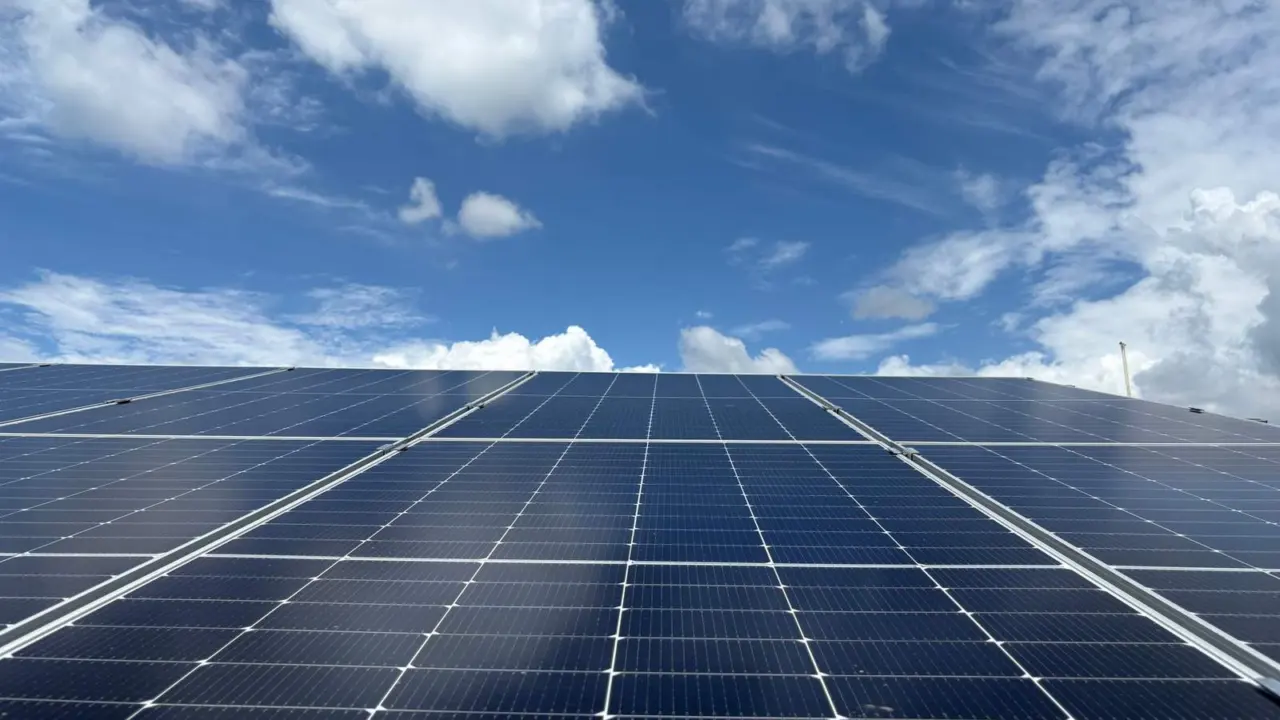
Solar panel efficiency is the share of the sunlight hitting a panel that becomes usable electricity. Commercial silicon modules now convert just under a quarter of it, and the percentage shapes how much roof or ground area a given amount of power needs.
Efficiency also drives progress in every photovoltaic type, including flexible solar cells, which are covered in the main guide to that technology.
The efficiency percentage and what it measures
The US Department of Energy defines the conversion efficiency of a photovoltaic cell as the percentage of the solar energy shining on a device that is converted into usable electricity. A panel rated at a higher percentage turns a larger share of the same sunlight into power, so it can produce a given amount of electricity from a smaller surface.
The percentage is measured under controlled conditions. According to the same DOE page, efficiencies are obtained by exposing the cell to a constant, standard level of light while holding the cell temperature constant, then measuring the current and voltage produced for different load resistances. Because the light and the temperature are fixed, two cells can be compared fairly in a laboratory, although a roof rarely offers such steady conditions.
The figure describes conversion, not capacity or lifetime output. It does not say how much electricity a system makes over a year, since that also depends on location, orientation, shade and weather. The basic question of how do solar panels work is covered in a separate explainer; this page stays with the percentage and what limits it.
Where the lost sunlight goes
The DOE states that not all of the sunlight reaching a cell is converted into electricity and that most of it is lost. Several effects in cell design set the ceiling.
- Wavelength. Sunlight at the earth’s surface spans ultraviolet, visible and infrared wavelengths. Some photons are reflected, others pass straight through, and some of the absorbed photons have their energy turned into heat. Only the remainder frees charge carriers that make current.
- Recombination. A freed electron can meet a hole and cancel out its contribution to the current. The DOE describes this as one of the fundamental factors that limits efficiency, and defects or impurities in the crystal make it easier.
- Reflection. The DOE notes that untreated silicon reflects more than 30% of incident light, which is why anti-reflection coatings and textured surfaces are used. A high-efficiency cell appears dark blue or black for that reason.
- Temperature. Solar cells generally work best at low temperatures. Heat causes a slight increase in current but a much larger decrease in voltage, according to the same source, and extreme heat can shorten the operating life of the module.
These losses explain why efficiency rises through many small design changes rather than one breakthrough. Passivated emitter rear contact cells, for example, overtook the older aluminum back surface field design around 2018 because of superior efficiency, according to the DOE overview of crystalline silicon research.
Laboratory records compared with panels on the market
Two different numbers are often mixed up: the best result ever certified for a small cell in a lab, and the average of modules that are actually sold. The table below separates them, using the Fraunhofer Institute for Solar Energy Systems report updated in July 2026.
| Technology | Efficiency | Type of result |
|---|---|---|
| Monocrystalline silicon cell | 28.1% | Laboratory record |
| Perovskite-silicon tandem cell | 35.2% | Laboratory record |
| Perovskite cell | 26.9% | Laboratory record |
| CIGS thin-film cell | 23.4% | Laboratory record |
| CdTe thin-film cell | 21.0% | Laboratory record |
| High-concentration multi-junction cell | 47.6% | Laboratory record |
| Crystalline silicon modules, shipment-weighted average (Q4-2024) | 22.7% | Commercial modules |
Source: Fraunhofer ISE, Photovoltaics Report, updated 14 July 2026, which lists official laboratory records from the Solar Cell Efficiency Tables of May 2026 and commercial module data from the fourth quarter of 2024.
The gap between the rows is large and has a reason. Laboratory records come from small cells, and the report counts only official records on cells with a minimum area of 1 cm2. Commercial modules must be manufactured in volume, assembled from many cells and sold at a workable price. Within the commercial group, the same report puts the lowest module at 18.9% and the highest at 24.8%, so two silicon panels on the market can differ noticeably.
The report also notes that n-type TOPCon and heterojunction technology is replacing p-type PERC. The highest row in the table belongs to high-concentration multi-junction cells, a different design from the single-junction silicon cells that dominate commercial modules.
Panel efficiency over time
Commercial efficiency has climbed steadily. The US Energy Information Administration reports that the efficiency of commercially available panels averaged less than 10% in the mid-1980s, increased to around 15% by 2015, and is now approaching 25% for state-of-the art modules. The Fraunhofer report describes the most recent decade the same way: commercial monocrystalline silicon modules rose from about 17% to just under 25%.
Gallium arsenide shows the other end of the scale. Alta Devices, a company based in Sunnyvale, California, repeatedly held the record for single-junction gallium arsenide cells. A July 2018 report in Semiconductor Today said the US National Renewable Energy Laboratory had certified Alta’s record at 28.9%, up from 28.8%, and that Alta had set the single-junction record five times since 2010. The same article described Alta as a subsidiary of Hanergy Thin Film Power Group since 2014. The record applied to a laboratory single-junction cell, not to a finished panel.
Theoretical limits and tandem cells
A single-junction cell cannot convert all sunlight, even in theory. pv magazine reported in September 2025 that the Shockley-Queisser limit, the upper theoretical limit of energy absorption efficiency for silicon solar cells, is about 33.7%. Certified silicon laboratory cells, at 28.1% in the Fraunhofer data, sit below that line, which leaves some room but not a great deal.
Stacking two light absorbers is the main way around the single-junction limit. The DOE explains that placing a perovskite layer on top of silicon uses the colors of light that silicon does not absorb well, giving a tandem cell that can theoretically be more efficient than either material alone. The Fraunhofer figure of 35.2% for perovskite-silicon cells in the table above is a laboratory result. The DOE adds that perovskite photovoltaics are not yet manufactured at scale and that several challenges must be solved before they become commercially competitive, so tandem cells remain a research result for now. A separate DOE page on perovskite solar cells covers that technology.
Efficiency in real installations
Higher efficiency matters most when the available area is limited. A small rooftop, a boat deck or a backpack can only hold so much surface, so a more efficient module delivers more power from the same space. Small portable solar panels show the trade-off clearly, because their size is fixed by what a person can carry.
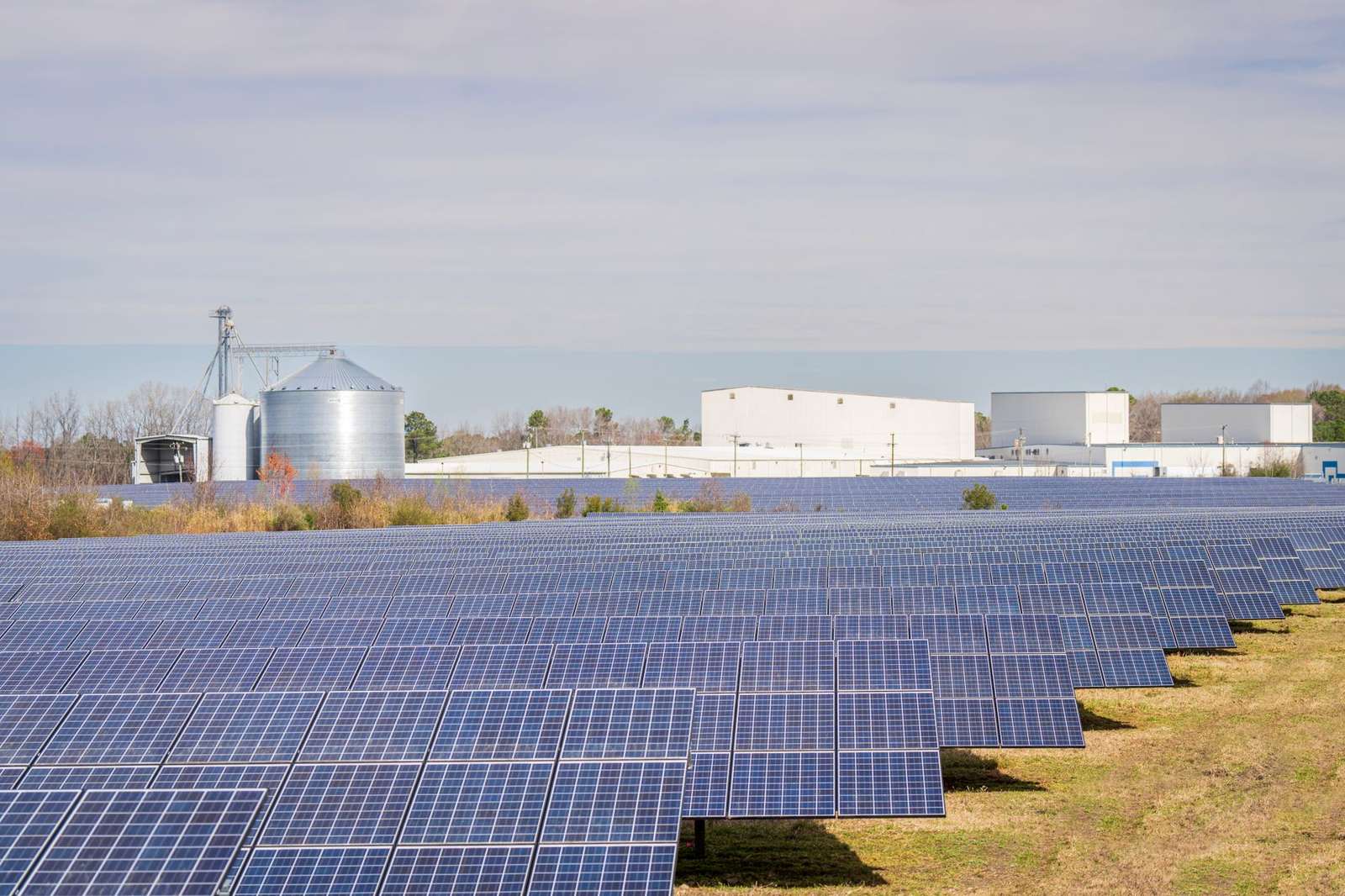
Where space is plentiful, efficiency matters less. A larger array of lower-efficiency modules can reach the same output, so the choice then turns on the other characteristics of the panel. The DOE notes that crystalline silicon modules reach lifespans of 25+ years with power degradation of less than 1% a year, so durability sits next to efficiency in any comparison. Fraunhofer ISE adds that the energy payback time of a system depends on location, at approximately 1.1 years for systems manufactured in Europe and installed in Northern Europe.
Because temperature lowers voltage, a panel’s rated percentage describes its performance under test conditions. Hot cells therefore tend to produce less than the laboratory rating suggests, which is one more reason the percentage is a comparison tool rather than a forecast. Sizing a real system, including wiring and connection to the grid, is work for a licensed installer or electrician.
Frequently asked questions
What is a good solar panel efficiency?
For commercial crystalline silicon modules, Fraunhofer ISE reports a shipment-weighted average of 22.7% for the fourth quarter of 2024, with the lowest module at 18.9% and the highest at 24.8%.
What is the highest solar cell efficiency ever recorded?
Among official laboratory records listed by Fraunhofer ISE in 2026, high-concentration multi-junction cells reach up to 47.6%, while the best non-concentrator figure in its list is 35.2% for perovskite-silicon tandem cells.
Why are lab records higher than the panels sold?
Records are set on small cells built for the purpose, while commercial modules must be made in volume. The Fraunhofer report lists a laboratory record of 28.1% for monocrystalline silicon against a commercial average of 22.7%.
Does heat reduce solar panel efficiency?
Yes. The DOE says solar cells generally work best at low temperatures, because higher temperatures cause a much larger decrease in voltage than the slight increase in current.
Is there a maximum efficiency for a silicon solar cell?
The Shockley-Queisser limit for silicon cells is about 33.7%, as reported by pv magazine in 2025. Multi-layer designs such as perovskite-silicon tandems are the main route past it.