Portable solar panels are photovoltaic panels built to be carried, unfolded and pointed at the sun, so a battery or power station can be charged away from the grid. They suit camping, boats and off-grid trips.
The cells inside them follow the same principles as the thin, bendable designs covered in the guide to flexible solar cells, which is why roll-up blankets now sit alongside rigid folding panels.
What a portable solar panel is made of and what it produces
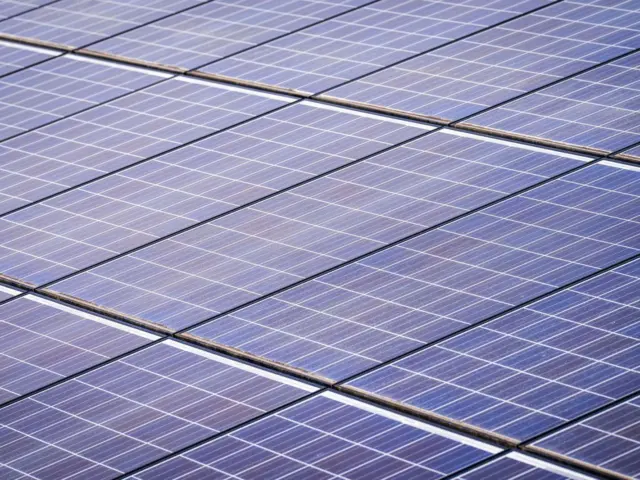
The U.S. Department of Energy explains that photovoltaic cells are connected in chains to form larger units known as modules or panels. A single cell is small: the Energy Information Administration (EIA) notes that one PV cell can only produce 1 or 2 Watts, enough for little more than a calculator or wristwatch. Panels combine many cells so that the output is useful, and the cells are packaged in a weather-tight panel that can sit outdoors.
The electricity a panel delivers is direct current. The EIA states that DC electricity can be used to charge batteries that power devices running on DC, and that inverters convert it to AC for devices that need mains-style power. A panel therefore makes electricity only while light falls on it; the battery is what supplies gear at night or on a dull afternoon. The EIA adds that panels produce the most electricity when they are directly facing the sun, which is why portable designs come with kickstands, straps or tie-down points for aiming them.
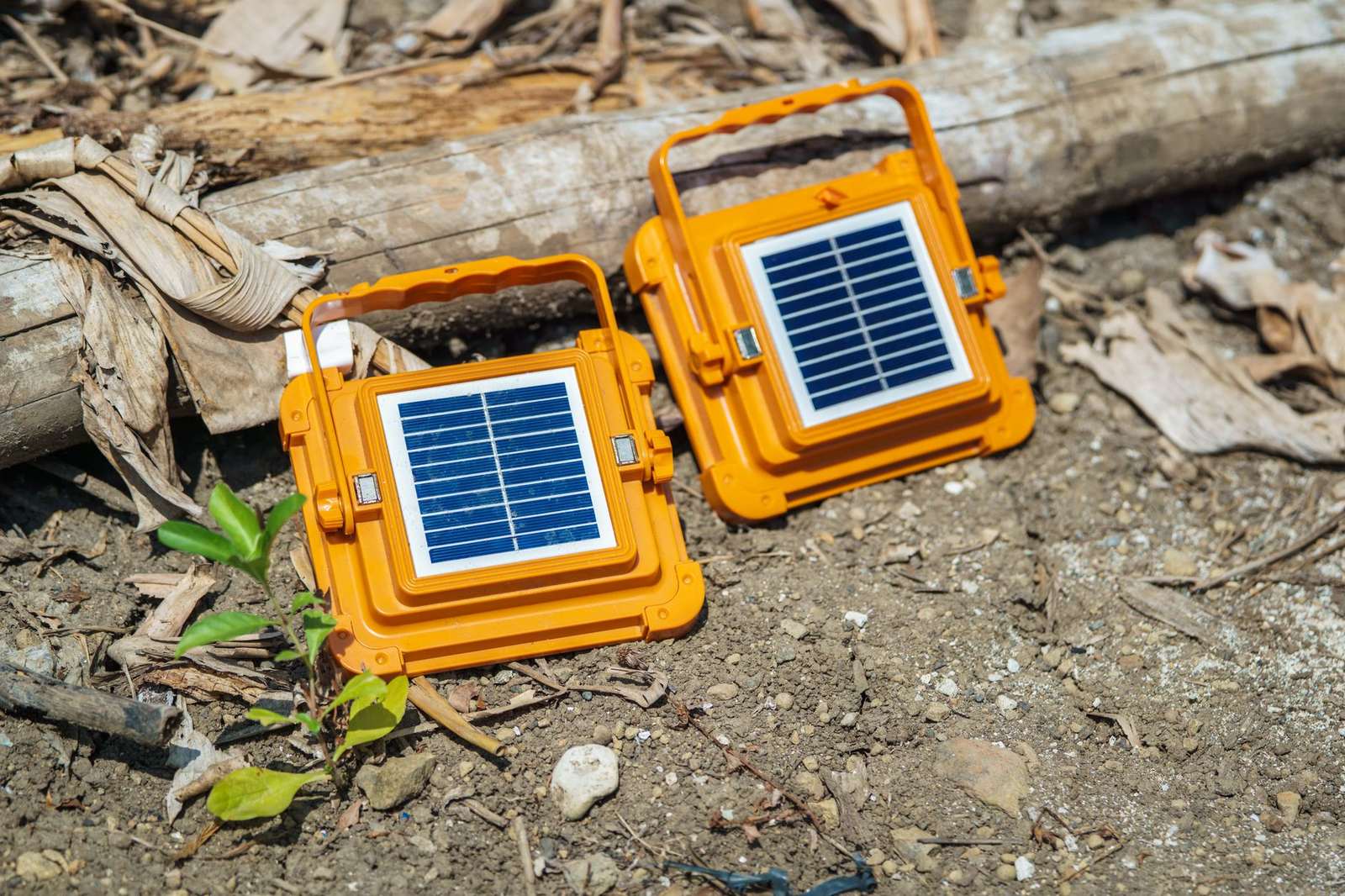
Folding panels and solar blankets compared
Two designs dominate carried solar. A folding panel is a rigid, framed unit hinged like a book. A solar blanket, also called a solar mat, is a flexible unit that unfolds like a picnic rug. SolarQuotes, an Australian solar information site, describes blankets as using flexible photovoltaic cells in a housing, and says that for portable panels, monocrystalline silicon is now the standard cell type, so shoppers rarely have to choose between cell types.
| Feature | Folding panel | Solar blanket |
|---|---|---|
| Construction | Rigid frame, hinged | Flexible cells in a soft housing |
| Weight | Heavier | Lighter |
| Packed size | Bulkier, briefcase-style | Folds flat |
| Handling | Generally tougher | Needs gentler packing |
| Cost per watt | Usually lower | Usually higher |
The comparison above follows SolarQuotes’ guide to portable panels, which calls folding panels durable and usually the cheaper choice watt for watt, while blankets are lighter and pack smaller but usually cost more per watt.
The choice comes down to where the weight goes. A panel that stays at a base camp or on a vehicle suits a rigid frame, while a pack that has to stay light favours a blanket, at the price of more careful handling.
How sunlight, season and shade set the output
A panel’s rating describes ideal conditions, and real days differ. The Department of Energy lists what changes the sunlight that arrives: geographic location, time of day, season, local landscape and local weather. Season matters a great deal at middle latitudes; Denver, Colorado receives nearly three times more solar energy in June than in December. Cloud matters too, since atmospheric conditions can cut direct beam radiation by 10% on clear, dry days and by 100% on thick, cloudy days, according to the same page.
Planners turn this into “sun hours”. Power & Motoryacht magazine defined a sun hour as 1 kW-hr/m2 falling on a surface, which is not the same as an hour of daylight. In its February 2015 issue, the magazine worked through two examples for a 140-watt panel: near New York in November, just two sun hours each day, or 280 watt-hours, against 3.7 hours and 518 watt-hours in Miami. The gap between the two figures shows how much location and season decide what a panel delivers. The magazine pointed readers to tables published by the National Renewable Energy Laboratory for local figures.
Shade is the other big factor. A rigid module wires its cells in series, so Penn State’s solar course notes that the module’s current will be dictated by the weakest cell, meaning the shaded one. Bypass diodes limit the damage: in the course’s example, each group of 20 cells has a dedicated bypass diode, and one shaded cell can cost the module about 30% of its voltage and power. Power & Motoryacht quoted an engineer saying that a 10-percent shadow can reduce output by maybe 60 percent in some cases. A branch, a guy line or a bag left across the corner of a panel can therefore cost far more than its size suggests.
How much power a given panel area yields also depends on cell efficiency. The guide to solar panel efficiency explains what the percentage means in practice, and the EIA says commercial efficiency is now approaching 25% for state-of-the art modules (page updated March 2026).
From panel to battery: charge controllers and power stations
A panel is rarely connected straight to a battery. Power & Motoryacht wrote in 2015 that most solar-panel systems require a charge controller, both to regulate voltage and to stop the battery discharging through the panel at night. The same article warned that without regulation a battery can be overcharged when panel output in watts is more than 10 percent of the battery’s amp-hour rating.
Controllers come in two main kinds. A pulse width modulation (PWM) controller passes current from the panel to the battery; the magazine quoted an engineer who said it loses about 20 percent along the way. A maximum power point tracking (MPPT) controller instead exploits the fact that, as SolarQuotes explains, a panel’s voltage and current change with sunlight and temperature, so there is always one combination that gives the most watts, and the controller keeps searching for it.
Portable panels are often used to charge a portable power station, which SolarQuotes describes as a battery, a charge controller, and an inverter in one box. In that case the controller is already inside, and the panel only has to suit the unit’s maximum solar input voltage and wattage. Separate kits can work differently: SolarQuotes notes that kits often leave out an inverter, which is needed for mains-style appliances.
Battery chemistry matters as well. Lead-acid and AGM batteries need a different charging voltage profile from lithium types, so the battery-type setting on a controller has to match what is being charged. The maker’s manual for the controller or power station is the reference for the settings and for the input limits.
Using portable panels on boats and at campsites
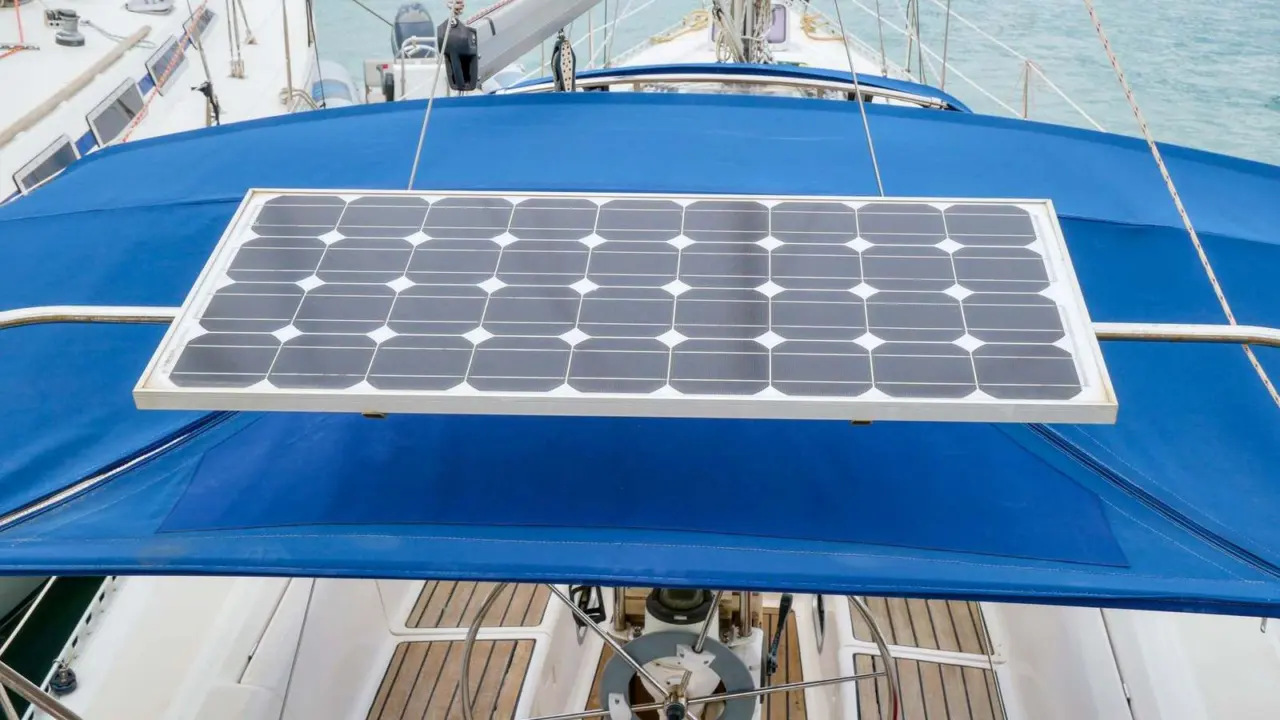
On a boat, a panel does a quiet job. Power & Motoryacht observed that a panel will keep your battery fully charged without leaving your boat plugged into shore power, which suits moored boats and small boats without shore connections. The magazine described many panel types, including fixed frame, foldable, rollable and semi-flexible, and framed placement as a real-estate problem: a spot with room, sun and as few shadows as possible. The magazine added that it is almost impossible to avoid shadowing on a boat, and recommended an MPPT controller to maximize output in shaded conditions.
Permanent installations are a different matter from a panel set out for a weekend. For any wiring beyond plugging a panel into a power station’s input, the magazine’s advice is to consult a qualified marine electrician if in doubt, and the same caution applies to caravans and vehicles.
At a campsite the sizing method is arithmetic. SolarQuotes tells readers to add up your daily watt-hours, divide by the number of good sun hours available, and then add a buffer. A traveller who knows the daily energy needs of a light, a phone and a small fridge can use that formula with a sun-hour figure for the season. The result is a minimum, and a cloudy spell argues for a larger margin or a bigger battery.
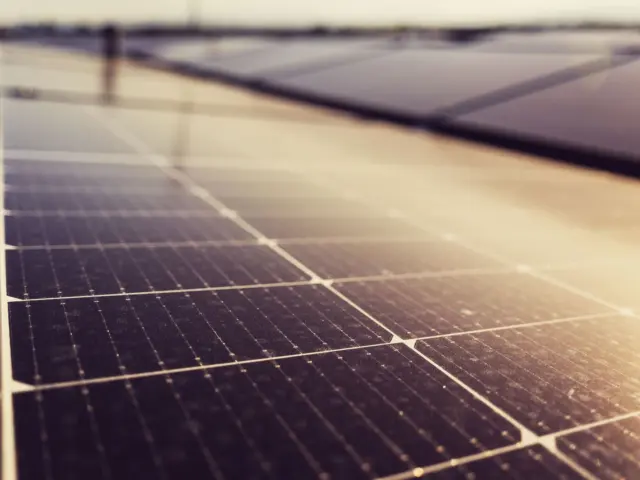
Aiming and keeping the panel clean matter day to day. SolarQuotes advises keeping the surface free from shade, leaves, and dust, and a panel that faces the sun directly produces more, so a folding panel is worth re-aiming through the day. For how output declines as cells age, see the guide to solar panel lifespan.
Handling and storing the batteries that go with them
Portable solar setups usually include lithium-ion batteries, and the U.S. Environmental Protection Agency gives plain guidance for them. It tells users to heed battery and product markings regarding safety and use. For loose batteries it recommends the fire-prevention step of taping the terminals or placing each battery in a separate plastic bag. If a battery is damaged, the agency says to contact the battery or device manufacturer for handling information, and it points out that even used batteries can have enough energy to injure or start fires.
At the end of a battery’s life, the agency says lithium-ion batteries should not go in household garbage or recycling bins and should be taken to a separate recycling or household hazardous waste collection point.
Frequently asked questions
Do portable solar panels store electricity?
No. A panel produces DC electricity only while light reaches it. Storage comes from a battery or power station, which the panel charges.
Can a portable panel be wired straight to a battery?
Most solar-panel systems use a charge controller, according to Power & Motoryacht’s 2015 guide, because it regulates the charging voltage and blocks discharge at night. Power stations have one built in.
Does shade matter on a portable panel?
Yes, and often by more than the shaded area suggests. Cells are wired in series, so a shaded cell can restrict the whole module’s current, as Penn State’s course explains.
What is a sun hour?
It is a unit of energy rather than a clock hour. Power & Motoryacht defined it as one kilowatt-hour of direct sunlight per square meter, and it is the number used to estimate a day’s output.