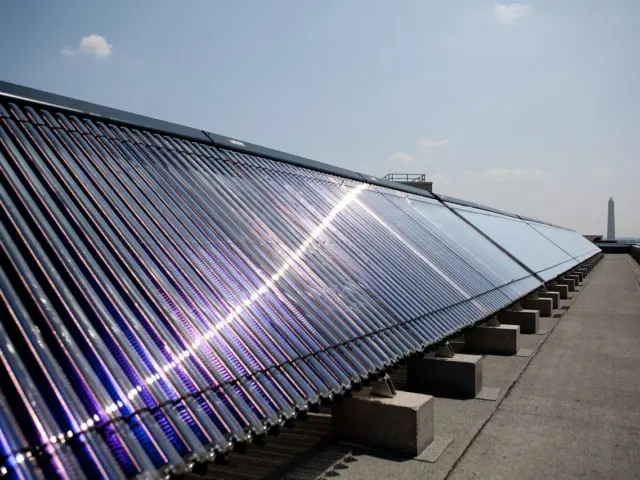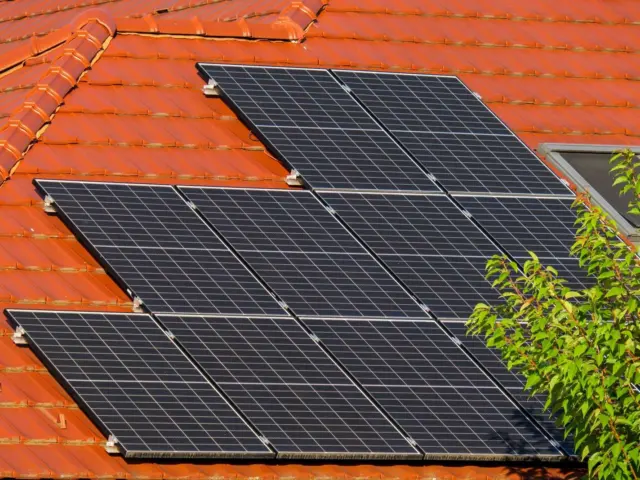
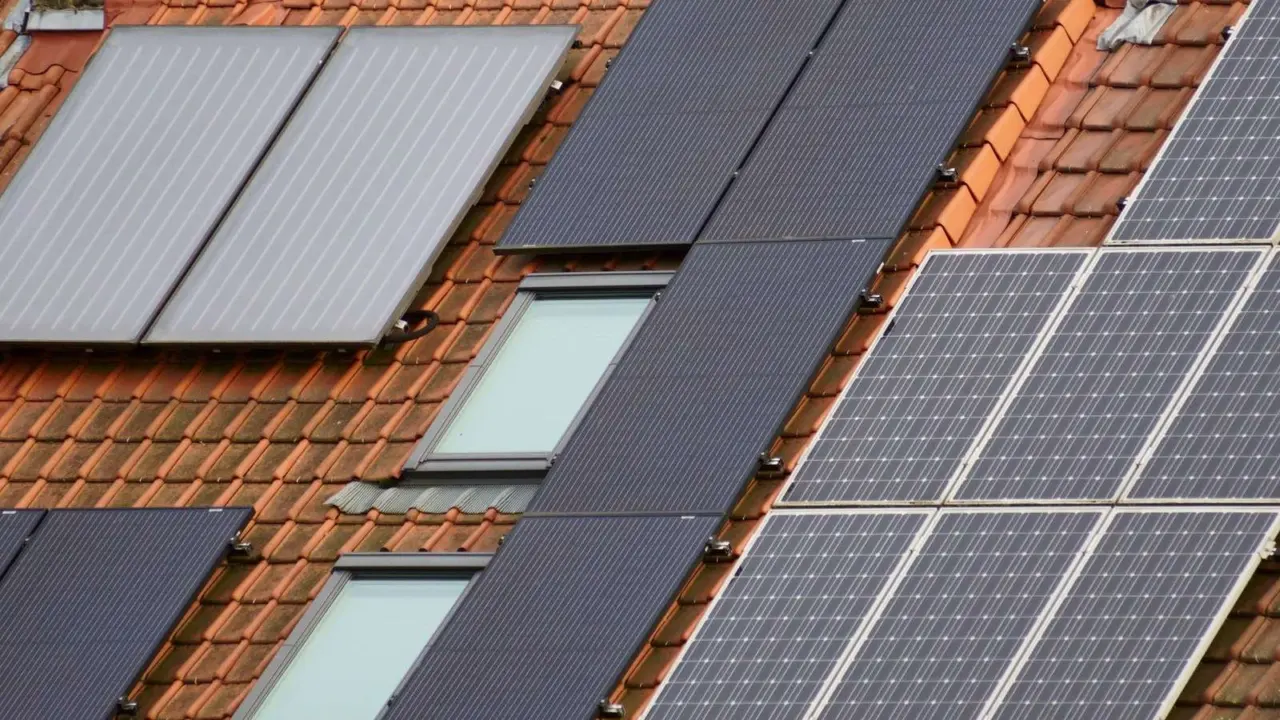
Rooftop solar installation follows a fixed order: a site survey, local building and electrical permits, utility interconnection approval, inspection and, last, permission to operate. A qualified professional should carry out the work, as the U.S. Department of Energy’s homeowner guide advises.
For the wider picture of household energy use, see the home energy savings hub. The process described here is the general United States pattern, and permit rules and utility procedures differ by locality and by utility.
Who carries out a rooftop solar installation
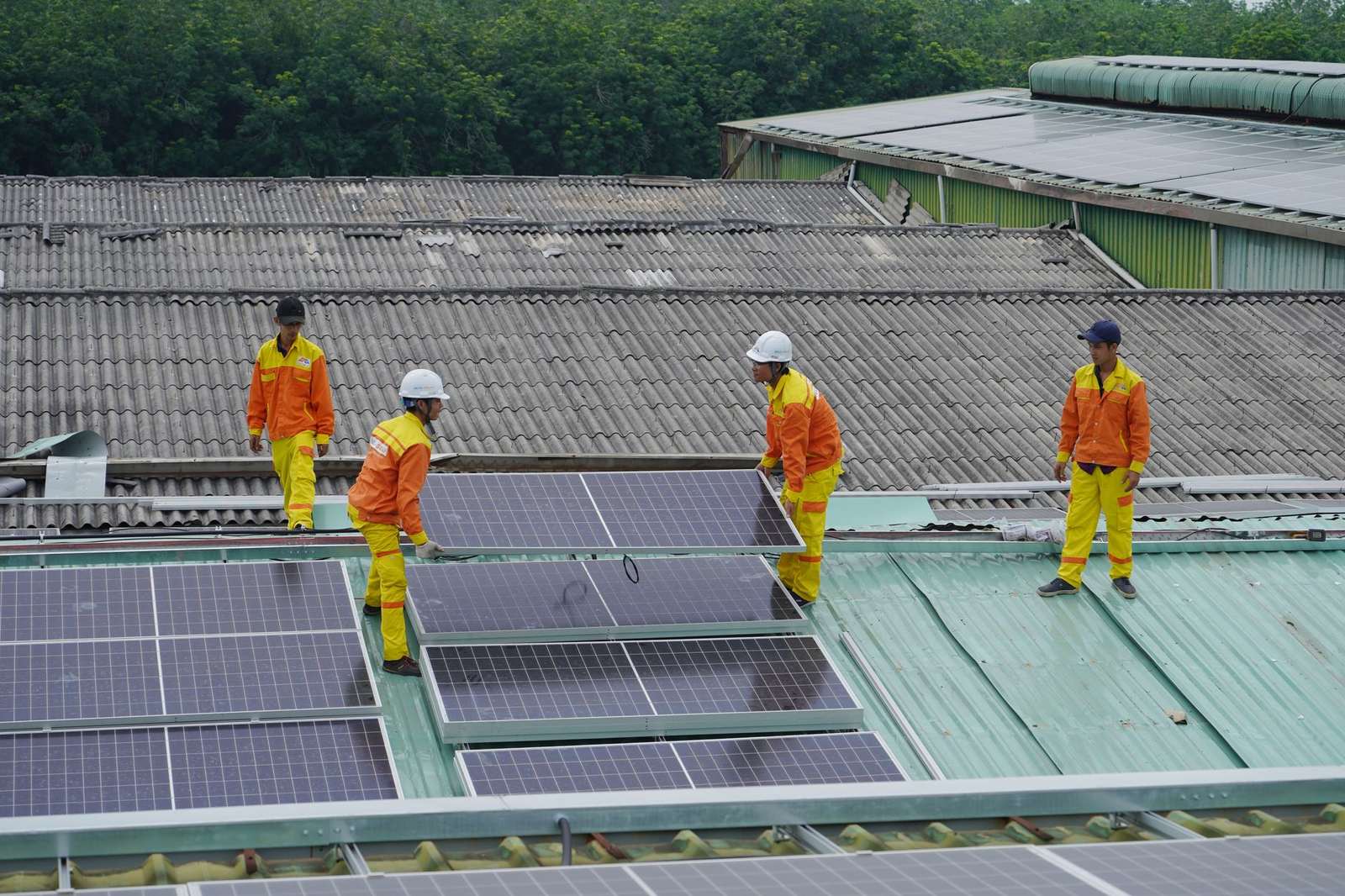
The U.S. Department of Energy states that the best way to install solar is through a qualified professional who holds a certification to do so and works with high-quality solar panels. In the same guide, the department names the North American Board of Certified Energy Practitioners as the body that awards the industry-standard certification. Such a certification is a useful credential to look for when comparing installers, although the permits and inspections described below are still required separately.
Mounting hardware attaches to the roof structure, and the array’s wiring joins the home’s electrical system and then the utility’s network. Those are the parts of the job that building and electrical officials review, so the roof work and the wiring belong to qualified professionals rather than to a homeowner’s weekend project. The sequence below shows who usually handles each stage.
| Stage | Usually handled by | What it produces |
|---|---|---|
| Site survey and design | The installer | Layout, equipment list and electrical diagrams for the applications |
| Building and electrical permits | The installer files; the local authority having jurisdiction approves | Approved permits before installation begins |
| Interconnection application | The installer files; the utility reviews | Written utility approval for the installation to proceed |
| Final inspection | The local authority inspects | A passed electrical inspection and a closed building permit |
| Permission to operate | The installer applies; the utility issues | Approval to switch the system on |
Stage order as described in the National Association of Home Builders page on the solar interconnection process.
The site survey: what the roof and property must offer
A survey checks whether the roof and the property suit solar before any design is final. The Department of Energy explains in its homeowner guide that solar panels are built to work in all climates, but in some cases rooftops may not be suitable because of age or tree cover. If trees near the home create excessive shade on the roof, the guide says rooftop panels may not be the most ideal option, and it lists the size, shape and slope of the roof as further factors.
On orientation, the same guide states that panels typically perform best on south-facing roofs with a slope between 15 and 40 degrees, though other roofs may be suitable too (Department of Energy). That is a typical-case statement for the United States, not a pass-or-fail rule, which is why a professional examines the actual roof.
Roof age also enters the survey. The guide advises considering the age of the roof and how long until it will need replacement. The reasoning is practical: roof work later affects an array that is already mounted on it.
The survey also feeds the paperwork. According to the National Association of Home Builders, solar design specifics for the utility might include layout, orientation, system size, equipment used, electrical diagrams and production estimates. Sizing matters because some utilities do not allow an interconnection if the electricity generated by the solar system exceeds the annual electric use by the site.
Estimating output before the design is final
Output estimates give the design a target. The Department of Energy’s guide describes PVWatts, a tool from a U.S. national laboratory that estimates the energy production and cost of energy of grid-connected PV energy systems for any address in the world. The tool’s own page cautions that its predictions include many inherent assumptions and uncertainties and do not reflect variations between PV technologies nor site-specific characteristics.
For context on scale, the guide says the National Renewable Energy Laboratory (NREL) uses an average system size of 7.15 kilowatts direct-current with a 3-11 kilowatt range in its analyses (Department of Energy). Online tools are described there as good for getting started, with a solar installer needed for a custom estimate of how much power a particular system is likely to generate.
Demand matters as much as supply. The guide notes that energy efficiency upgrades complement solar energy economically, and that using Energy Star appliances and other efficient products means a home needs less solar energy to power it. The page on smart thermostat savings covers one such upgrade. Whether a given array repays its cost is a separate calculation, set out under solar panel payback period.
Building and electrical permits
Both electrical and building permits need to be filed and approved with the local Authority Having Jurisdiction, abbreviated AHJ, before installation, as the National Association of Home Builders explains. The AHJ is the local office that enforces the building and electrical codes, and its approval is a check on the structural and wiring work by someone other than the installer.
Permitting can slow residential solar considerably. A December 2023 Department of Energy release says solar permitting can cause a major bottleneck, adding weeks or even months to adoption timelines. It adds that a survey of PV installers suggests many either avoid communities with burdensome permitting requirements or charge a 10%-20% price premium.
Some communities now automate part of the review. As of December 2023, 160 communities across 10 states were using SolarAPP+, which the department describes as a free, online software platform for local governments that standardizes, streamlines, and automates the solar permitting process (Department of Energy). A July 2023 department article reports that projects using it were permitted, installed, and inspected 13 days sooner than traditional projects.
The Department of Energy’s guide adds that the costs associated with installation, such as permitting and inspection, have been dropping along with panel prices.
Interconnection approval from the utility
Interconnection is the utility’s approval for the system to exchange power with the grid. The first step with the utility is an application for approval to interconnect, which is generally completed by the solar installation company, according to the National Association of Home Builders. The application gives the utility information about the property, the electricity consumption of the building and the design details, which helps determine whether the local grid can handle a connection that carries power in both directions.
Once any application issues are clarified, the utility grants an official written approval by email that allows the installation to proceed (National Association of Home Builders). Each local utility likely has different processes, policies and turnaround times, so the utility’s own website is the starting point; the same page suggests searching it for terms such as solar interconnection, renewable energy or simply interconnection.
Billing for exported power is a separate policy question. Net metering is an arrangement between solar energy system owners and utilities in which the owners are compensated for any solar power generation that is exported to the electricity grid, and whether a system qualifies depends on policies and practices in the state and electric utility, according to the Department of Energy guide.
Final inspection, metering and permission to operate
After the installer finishes, an electrical inspection with the local AHJ needs to be scheduled, and a building inspection closes out the building permit (National Association of Home Builders). Once the electrical inspector passes the system, the installer goes back to the utility and applies for the Authority to Interconnect, also called Permission to Operate (PTO).
The utility wants proof that the finished work matches the application. Supporting documentation might include photos of the installed panels, wiring, inverters and other major system components, plus a copy of the signed electrical permit. Sometimes the utility carries out an additional inspection, although for many residential systems the photo documentation and signed electrical permit are sufficient, as the same page notes.
A utility representative then installs or adds a meter that records how much electricity is exported to the grid as well as how much is imported to the home. That bi-directional meter also allows net metering or net billing, if those arrangements are available where the home is located. When the meter is in place and the final paperwork is confirmed, the utility issues the PTO and the system can be officially turned on (National Association of Home Builders).
Checking the installer and the paperwork
Federal agencies have published consumer guidance on solar. According to the Department of Energy guide, the Department of the Treasury, the Consumer Financial Protection Bureau and the Federal Trade Commission issued a consumer advisory on August 7, 2024 to help identify potential consumer solar scams and file complaints about suspicious behavior.
The guide’s red-flag list covers not giving in to pushy sales tactics, talking to certified installers, understanding financing options and reporting bad actors. It also asks readers to review the educational materials for buying panels, signing a solar lease, signing a power purchase agreement and signing a solar subscription before signing any documentation with a solar company. Questions about financial terms or taxes belong with a qualified professional and the official programme pages, not with a general explainer.
Frequently asked questions
Can a homeowners association stop rooftop panels?
In most cases a home governed by an HOA can still have panels, though a request will likely have to be submitted. The Department of Energy guide adds that many states and territories have enacted solar access laws that prevent HOAs from prohibiting or unreasonably restricting solar installations, and that those laws vary by state.
How long does the grid connection take?
It depends on system size and on how efficiently the local utility processes applications. The National Association of Home Builders says the interconnection process could take several weeks to several months.
What if the roof is not suitable for panels?
The Department of Energy guide points to community solar, which lets a group of participants share an array installed on or off site, for people whose roofs are judged unsuitable or who do not own their home.
Can the system run as soon as the panels are mounted?
No. The system stays off until the utility grants permission to operate, which follows the inspection and metering steps covered above.
Where can complaints about a solar company be filed?
The Department of Energy guide directs readers to the Federal Trade Commission’s fraud-reporting site and to the online complaint form of the Consumer Financial Protection Bureau, and notes that some states have their own consumer protection offices.