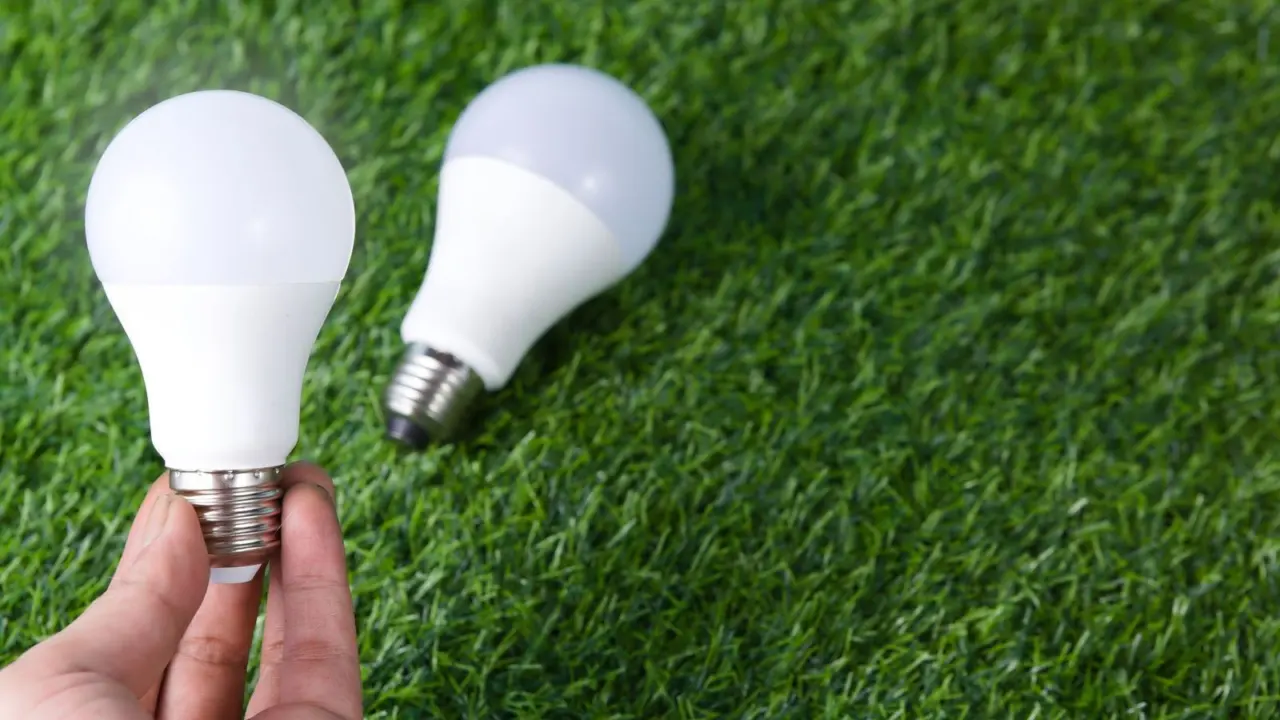
LED lighting energy savings start with efficiency: ENERGY STAR states that LED lighting products produce light up to 90% more efficiently than incandescent light bulbs. How much that saves in a given home depends on what is replaced and how long the lights run.
This guide sits inside the wider topic of home energy savings. It covers where lighting fits in household electricity use, why the technology wastes less energy, what national data show about LED adoption, and how fixtures and controls change the outcome.
Lighting’s share of household electricity use
The U.S. Energy Information Administration (EIA) runs a Residential Energy Consumption Survey, and its lighting FAQ, last updated March 15, 2024, reports that in 2020 electricity consumption for lighting accounted for about 6% (81 billion kilowatthours) of electricity consumption in U.S. homes. The same EIA page reports that in 2018 lighting accounted for about 17% (208 billion kWh) of electricity consumption by U.S. commercial buildings. Both figures describe the United States only; other countries have different housing stock, climates and lighting habits.
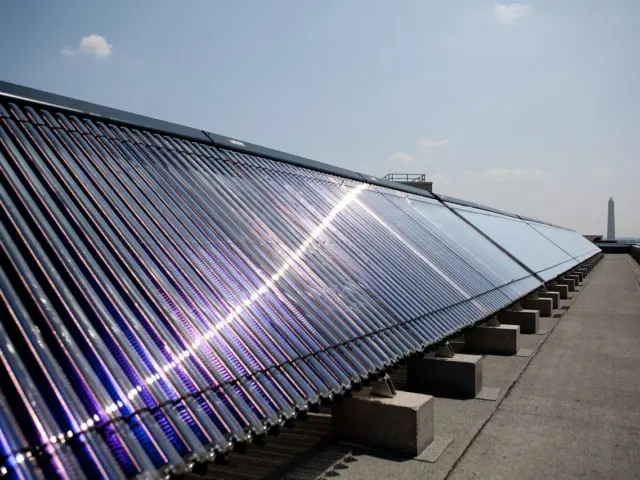
Those shares set a ceiling on what a lighting upgrade can do. Lighting is one end use among several in a home, so even a very efficient lamp can only reduce the lighting portion of the electricity bill, not the whole of it. Every other end use accounts for the rest, and each has its own measures. Water heating, for example, is a separate end use, and a solar water heater addresses that load rather than lighting.
For that reason, lighting is usually treated as one of the simpler places to start rather than the whole plan. The change involves little disruption, the technology is mature, and the public data on it are detailed. The sections below explain how the saving arises and what limits it.
LED efficiency and the conversion of electricity into light
The saving begins with how each lamp type produces light. Incandescent bulbs make light by using electricity to heat a metal filament until it becomes white hot, and ENERGY STAR notes that, as a result, incandescent bulbs release 90% of their energy as heat. In a bulb of that kind the heat is the main output and the light is a by-product.
An LED works differently. According to the same ENERGY STAR page, an electrical current passes through a microchip, which illuminates the tiny light sources called LEDs, and the result is visible light. The heat that the LED does produce is absorbed into a heat sink. Because less of the input becomes heat, more of it becomes light, which is the basis of the efficiency claim quoted at the top of this guide.
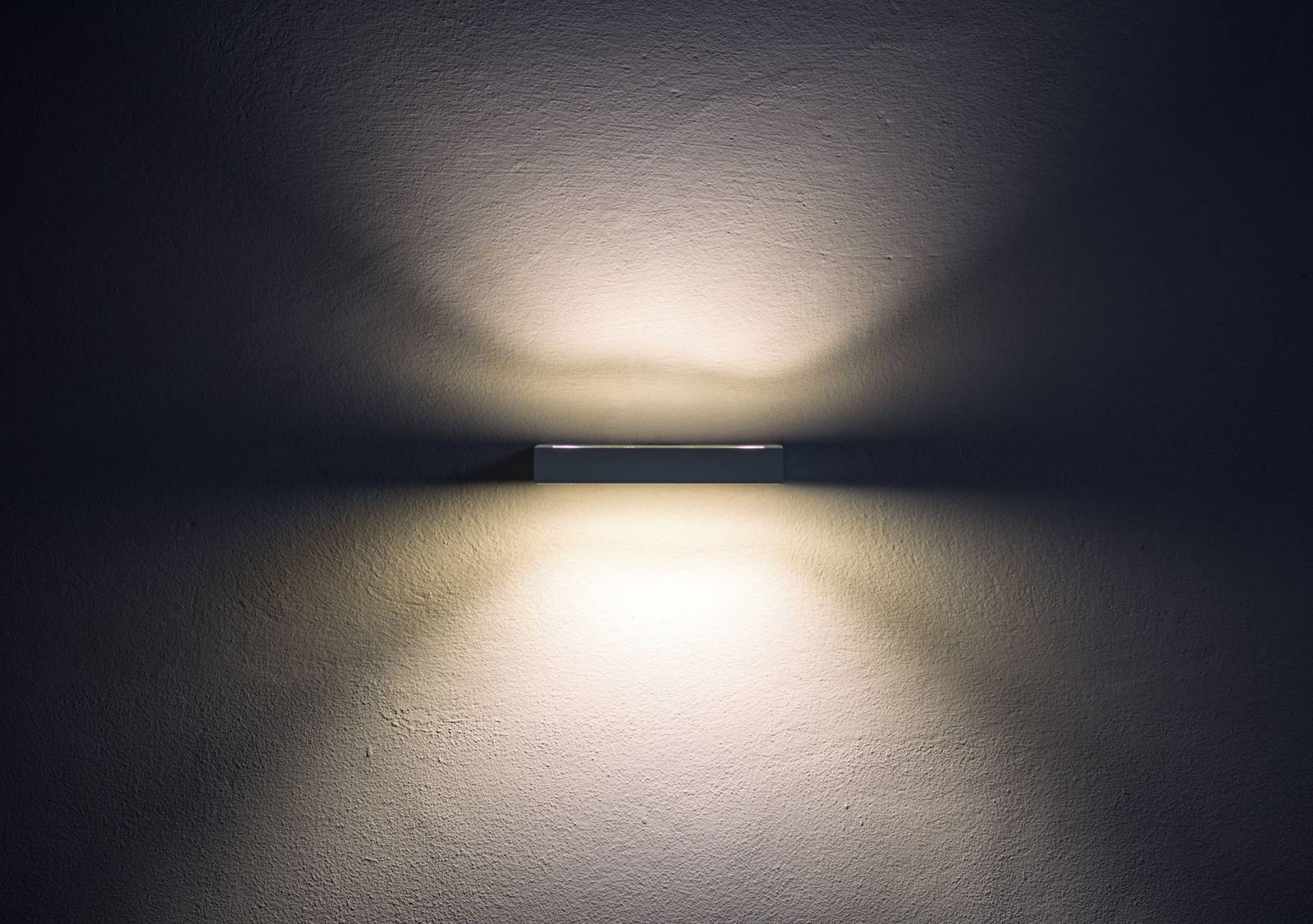
ENERGY STAR also describes LEDs as directional light sources: they emit light in a specific direction, unlike incandescent and compact fluorescent lamps, which emit light and heat in all directions. That lets LEDs use light and energy more efficiently in many applications where the light is wanted in one place. The same page adds that sophisticated engineering is needed to produce an LED bulb that shines light in every direction.
LED lifetime and lumen depreciation
LEDs rarely stop working suddenly in the way a filament does. ENERGY STAR explains that LEDs typically do not “burn out” or fail; instead they experience lumen depreciation, in which the brightness of the LED dims slowly over time. Because of that, the rated lifetime of an LED product is a prediction of when the light output has fallen by a set amount, and the same page gives the definition as a decrease of 30 percent.
This matters for savings in two ways. A lamp that is still working but has dimmed is still drawing power while giving less light. A lamp described as longer lasting also means fewer replacements over the years. The ENERGY STAR page summarises the trade-off by saying that, when designed well, LED lighting is more efficient, versatile and lasts longer.
Heat is the main enemy of that long life. The page states that thermal management is generally the single most important factor in the successful performance of an LED over its lifetime, and that the higher the temperature at which the LEDs are operated, the more quickly the light will degrade and the shorter the useful life will be. The way a fixture handles heat therefore affects how long the lamp keeps its brightness.
National data on LED adoption and savings
The U.S. Department of Energy (DOE) tracks how widely LEDs have spread and how much energy they have saved. Its LED Adoption Report, which models the year 2018, found that from 2016 to 2018 installations of LED products increased in all applications, roughly doubling to 2,325 million units and bringing LED penetration to 30.0% of all general illumination lighting, according to the DOE report. Those are installed-stock figures for the United States, not sales figures.
The same report estimates that LED and connected lighting provided approximately 1,328 trillion British thermal units (tBtu) in source energy savings in 2018, equivalent to an annual cost savings of about $14.7 billion. That figure is in U.S. dollars, applies to the United States as a whole; it is a national modelled estimate, not a figure for any single household. The report measures savings against a reference case, described as a comparative scenario modeled on the level of LED adoption on the market in 2010.
The report also separates indoor from outdoor use. It finds that LED lighting has a higher penetration in outdoor applications, at 51.4%, compared with indoor applications, where LED lighting has a total penetration of 29.8%, as set out in the same DOE report. A reader should note that these are national averages from a model, and they show a market still in transition rather than a finished one.
Looking forward, DOE’s LED Basics page says LEDs offer the potential for cutting general lighting energy use nearly in half by 2030, as stated on the DOE LED Basics page. That is a statement of potential rather than a forecast of any particular household’s result.
Fixtures, color quality and controls change real savings
The efficiency of the LED chip is only part of the picture. The DOE LED Basics page distinguishes between the efficiency of the LED device itself (source efficacy) and how well the device and fixture work together in providing the necessary lighting (luminaire efficacy). How much electricity is consumed depends not only on the LED device but also on the fixture design, the efficiency of the power supply, and the inclusion of features that may reduce source efficiency but have other benefits.
The same page gives a concrete example of fixture losses: with many fixture types, including recessed downlights, troffers and undercabinet fixtures, it is not uncommon for only 50% to 60% of the total light produced to be emitted. Light that is trapped inside a fixture is energy spent for no benefit, so a well-designed fixture can matter as much as the lamp inside it.
Light quality is part of the decision as well. DOE notes that LED light sources can achieve a wide range of color qualities, and that in general a minimum color rendering index (CRI) of 80 is recommended for interior lighting. CRI is a measure of how the light affects the color appearance of objects. Higher color fidelity can carry cost and efficiency trade-offs, according to the DOE LED Basics page, so the most efficient option on paper is not always the most suitable one for a kitchen or a workshop.
Controls add a further layer. Because LED sources are inherently dimmable and instantaneously controllable, DOE says they can be readily integrated with sensor and control systems, enabling further energy savings through occupancy sensing, daylight harvesting and local control of light levels, as described on the same DOE page. In practice this means that the habit of switching lights off in unused rooms, or letting a sensor do it, multiplies the benefit of an efficient lamp.
Fitting lighting into a wider home energy plan
A lighting upgrade changes electricity use for lighting and little else. Heating and cooling loads depend mainly on the building itself, which is why measures such as home insulation are usually considered separately from lighting. Comparing the two is a matter of looking at each end use’s share of the household total, which a utility bill or a professional energy assessment can help to show.
Changing a bulb is ordinary household maintenance, but replacing a fixture or altering wiring is electrical work. Where local rules apply, that work belongs with a licensed electrician rather than being attempted from a general guide such as this one.
Prices, rebates and incentives for lighting differ by country and change over time. Readers who want current figures can find them through their own utility or national energy agency.
Frequently asked questions
Do LED bulbs burn out like older bulbs?
Typically not in the same way. ENERGY STAR says LEDs usually dim gradually through lumen depreciation rather than failing outright, and that LED lifetime is established on a prediction of when light output decreases by 30 percent (ENERGY STAR).
How much of a home’s electricity goes to lighting?
For U.S. homes in 2020, the EIA reports about 6% of electricity consumption, or 81 billion kilowatthours, was used for lighting (EIA). Homes elsewhere will differ.
Why does the fixture matter as well as the bulb?
DOE separates source efficacy from luminaire efficacy and notes that for some fixture types only 50% to 60% of the light produced may be emitted, so losses inside the fixture reduce the benefit of an efficient source (DOE).
Does the saving show up the same way in every country?
No. The figures here come from U.S. agencies and describe U.S. buildings and lighting stock. A household in another country should look for its own national energy agency’s data before drawing conclusions.