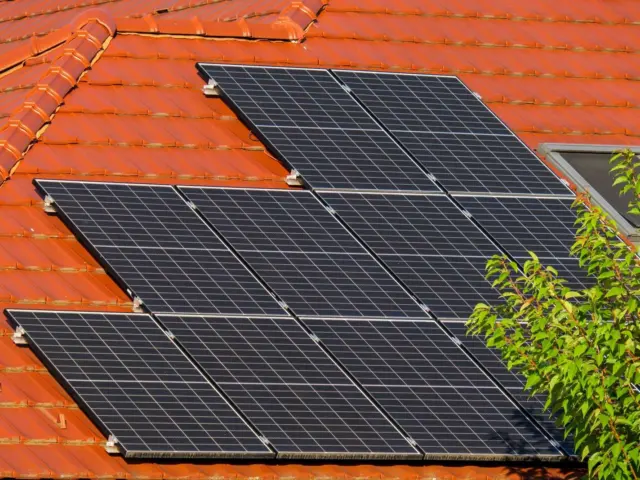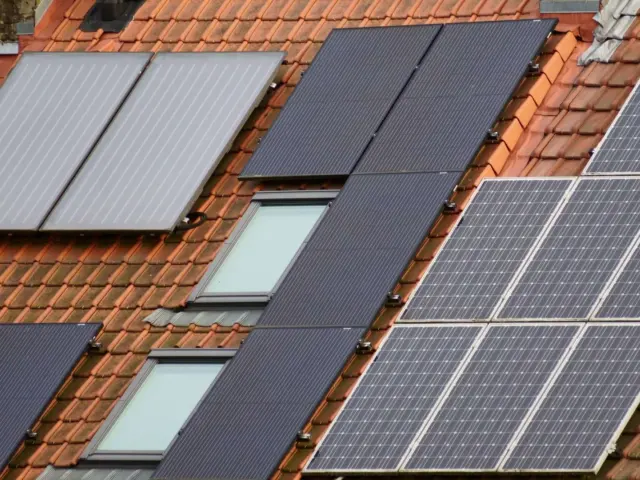
A solar water heater uses roof-mounted collectors to capture sunlight as heat and pass it to a storage tank, so a boiler or electric element has less work to do. The main collector designs are batch, flat-plate and evacuated-tube.
This guide explains how each design works, how circulation and freeze protection differ, and which homes suit solar hot water. It sits within the wider topic of home energy savings, where water heating is one of several uses worth understanding before any equipment is chosen.
How a Solar Water Heating System Works
According to ENERGY STAR, solar water heaters come in a wide variety of designs, all including a collector and storage tank, and all using the sun’s thermal energy to heat water. The collector sits in the sunlight and absorbs heat, and the tank holds the heated water until a tap is opened. Systems are usually described by two features: the type of collector and the way water or fluid circulates.
The Energy Saving Trust, a United Kingdom advice body, describes a typical household arrangement as of its August 2025 update. Inside the roof panels, a liquid (a mixture of water and antifreeze) flows through small pipes and is heated by the sun. The hot liquid is pumped through a coil inside a hot water cylinder, which warms the stored water, and the cooled liquid returns to the roof to repeat the cycle.
A solar system is rarely the only source of hot water. The same advice page says solar thermal systems are usually used alongside a conventional boiler or immersion heater, and that most are designed to provide hot water for baths, showers and hot taps only. In the United States, ENERGY STAR states, as of November 2026, that a certified solar water heating system can cut annual hot water costs in half and is generally designed for use with an electric or gas back-up water heater.
Why Water Heating Is Worth Targeting
Water heating is a steady, year-round demand. The U.S. Energy Information Administration (EIA) reported from its 2015 survey that a two-person household consumed 12.5 million British thermal units on average, or 16% of overall consumption, to heat water, while a four-person household used 24% of its consumption on it, as set out in EIA’s Today in Energy analysis. EIA says variation in water heating consumption is driven primarily by the number of occupants in a home.
A later EIA explainer adds that water heating, lighting and refrigeration are year-round home energy uses, and that in 2020 these three end uses together accounted for 25% of total annual home energy use in the United States. The figures are in EIA’s overview of energy use in homes. Seasonal uses such as space heating and cooling come on top of this baseline.
In the United Kingdom, the Energy Saving Trust’s August 2025 advice page puts hot water at around 11% of the average energy bill, per its solar water heating guidance. The shares differ between countries, fuels and household sizes, which is why the same collector can look attractive in one home and marginal in another.
Collector Types: Batch, Flat-Plate and Evacuated-Tube
The collector is the part that actually meets the sun, and three designs dominate residential discussions. ENERGY STAR’s how-it-works page describes each of them, and the table below condenses those descriptions.
| Collector type | How it is built | Notes on climate and use |
|---|---|---|
| Batch (integrated collector-storage) | Dark tanks or tubes inside an insulated box, storing water until it is drawn | Generally not recommended for cold climates; water can become very hot, so a tempering valve is used at the tap |
| Flat-plate | Copper tubes fitted to flat absorber plates, inside an insulated box covered with tempered glass | Typically sized to hold a set volume of water; several collectors are combined for a family |
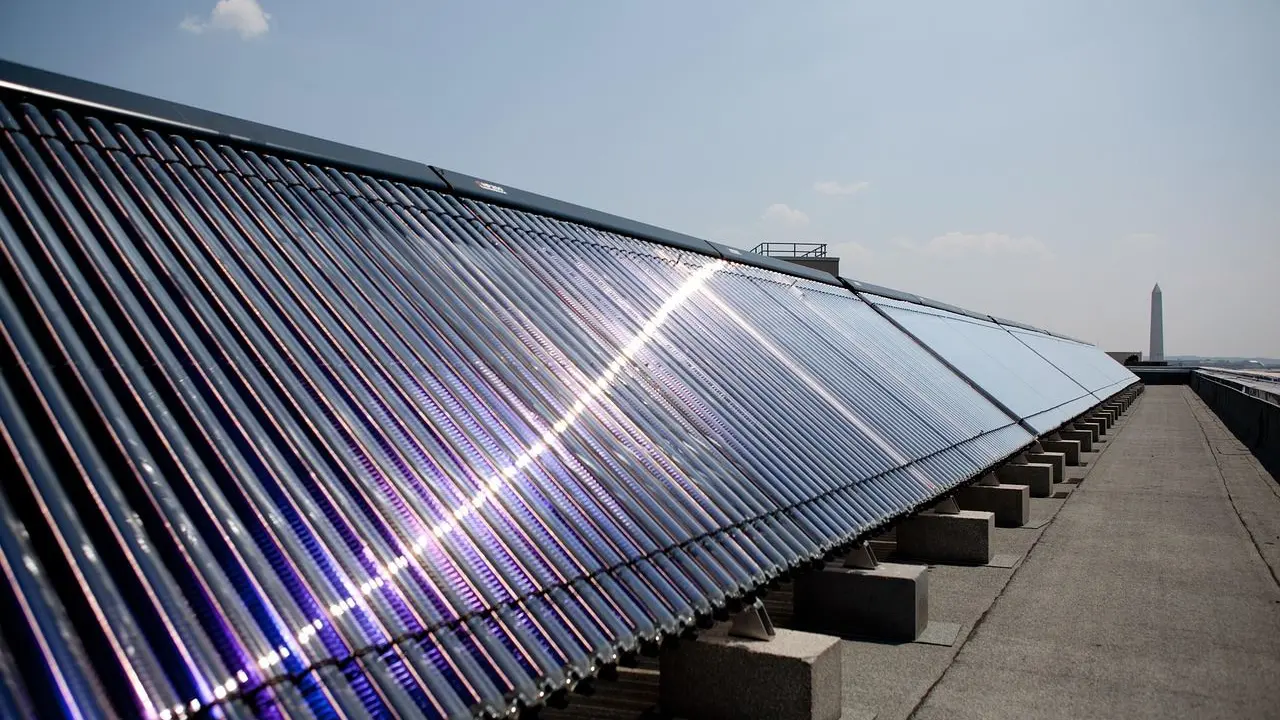
| Evacuated-tube | A glass or metal tube holding water or heat transfer fluid, surrounded by a larger glass tube with a vacuum between them | Described as the most efficient collector type; works in overcast conditions and very low temperatures |
The table summarises descriptions published by ENERGY STAR and Natural Resources Canada.
Batch collectors store the water inside the collector itself. ENERGY STAR notes that water can remain in a batch collector for long periods if household demand is low, which can make it very hot, and that a tempering valve mixes in cold water before delivery to the tap. Because batch collectors are incompatible with closed-loop circulation, the agency says they are generally not recommended for cold climates.
Flat-plate collectors are the familiar rooftop panels. As of November 2026, ENERGY STAR says flat plate collectors are typically sized to contain 40 gallons of water and that two collectors provide roughly half of the hot water needed to serve a family of four.
Evacuated-tube collectors apply the principle of a thermos flask. A glass or metal tube containing the water or heat transfer fluid is surrounded by a larger glass tube, and the space between them is a vacuum, so very little heat is lost from the fluid, according to ENERGY STAR. The same page states that these collectors can work well in overcast conditions, can operate in temperatures as low as -40°F, and can cost twice as much per square foot as flat plate collectors. Individual tubes can be replaced as needed.
Circulation Systems and Freeze Protection
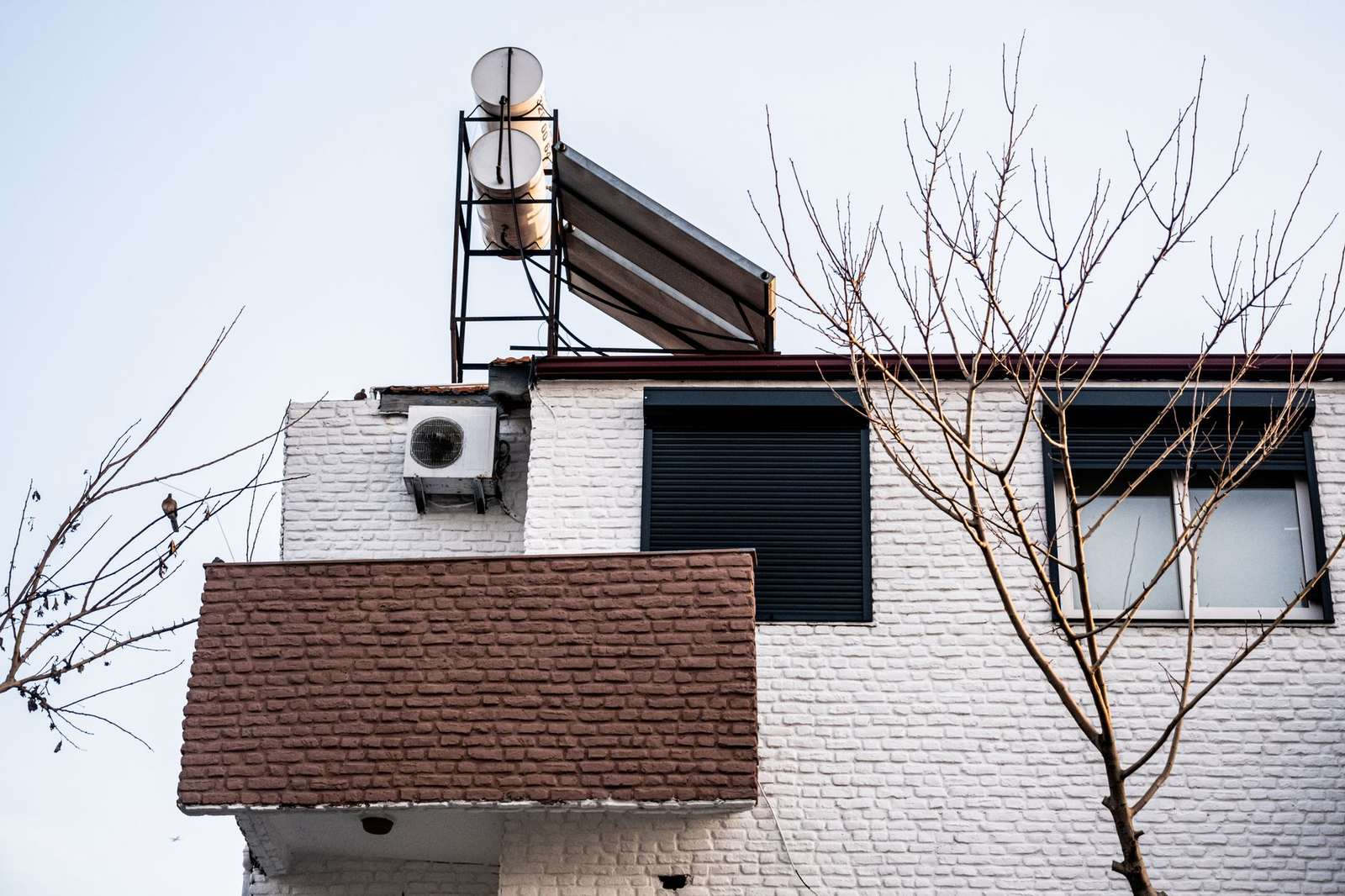
The second way to classify a system is by how heat moves from the collector to the tank. ENERGY STAR separates active systems, which use electric pumps, valves and controllers to move water from the collectors to the storage tank, from passive systems, which need no pumps because natural convection moves water from the collectors to the tank as it heats up.
It also separates direct from indirect designs. Direct systems circulate water through the solar collectors, where it is heated by the sun, and are described as preferable in climates where it rarely freezes. Closed-loop, or indirect, systems use a non-freezing liquid to transfer heat from the collectors to water in a storage tank through a heat exchanger, and the same page says these systems make sense in freezing climates.
Freezing is the main design hazard. Cold-climate buyers are steered toward protected designs for that reason. In its buying guidance, ENERGY STAR says that where there is a good chance temperatures will fall below 42°F, the choice should be a closed-loop system with antifreeze as the heat transfer fluid, or a system that automatically drains back when temperatures fall too low.
The picture is similar in Canada. Natural Resources Canada says that for year-round use in most of Canada, solar water systems typically use antifreeze in the collectors instead of water, and that a freeze-protected system generates hot water even when the mercury dips well below zero.
Where Solar Water Heating Makes Sense
Site conditions come first. ENERGY STAR’s guidance for the United States says a roof should receive direct sunlight between the hours of 10 AM and 4 PM year round, face south within 30° of due south, and be sturdy with shingles in good condition. If the roof is unsuitable but unshaded land is available next to the home, a ground-mounted system may be an option. The details are on ENERGY STAR’s buying guidance page.
The Energy Saving Trust gives a UK equivalent: collectors work best on a south-facing roof, or somewhere between east and west but not north-facing, and a household needs around five square meters that get direct sunlight for the main part of the day, per its August 2025 guidance. Collectors can also sit on a frame on a flat roof, hang from a wall or stand on the ground.
Output swings with the seasons. The Energy Saving Trust says solar water heating systems normally provide roughly half of a household’s hot water needs on average, with around 90% in the summer dropping to around 25% in the winter, and a boiler or immersion heater makes up the difference. In Canada, Natural Resources Canada says a solar domestic hot water system can provide up to 60 percent of the hot water for an average home, depending on local climate and typical hot water use.
The existing plumbing matters as well. The Energy Saving Trust notes that a conventional boiler with a hot water cylinder is often compatible, but that the cylinder may need replacing with one designed for solar water, and that few combi boiler models are compatible with solar thermal systems. These are plumbing and heating changes, so they belong with a qualified installer.
A household weighing a roof for hot water against a roof for electricity may also look at home battery backup, which covers a different use of rooftop energy. Cutting electricity use in other rooms is a separate measure; the guide to led lighting energy savings covers lighting.
Solar Water Heating Around the World
Solar heat is a large global market. The International Energy Agency’s Solar Heating and Cooling Programme reported in its 2024 edition, covering 2023 data from 72 countries, that 18 GWth, or 26 million square meters, of collectors were installed that year. The same report says 122 million systems were in operation and total operational solar thermal capacity reached 560 GWth, as published in Solar Heat Worldwide 2024.
The market is concentrated. The report says China commands over 70% of the global market share and that its market declined by 7.7% in 2023, while growth was shifting toward emerging markets in Africa, Southeast Asia and Latin America.
Installation, Maintenance and Licensed Professionals
Installing a solar water heater means working on the roof, the plumbing and often the electrics for pumps and controllers, so it is not a do-it-yourself job. ENERGY STAR states that installing a system on an existing home requires careful installation, which often includes running pipes through walls, and recommends a contractor certified by the North American Board of Certified Energy Practitioners where possible. The contractor can assess the site, recommend a system, install it and perform periodic maintenance.
The same page suggests reviewing any roof warranty and making sure the contract requires the contractor to repair leaks or damage to the roof caused by their work. In the United Kingdom, the Energy Saving Trust refers to installers certified under the Microgeneration Certification Scheme.
Maintenance is routine rather than demanding. ENERGY STAR lists items to check periodically, such as keeping the collector clean and not shaded, confirming the glazing is not cracked or yellowing, and confirming that pumps in active systems activate when the sun is shining, while recommending a qualified contractor for annual maintenance inspections. The Energy Saving Trust adds that a system should be checked thoroughly every five years to flush it and replace the fluid mix. Any work on pipes, pumps, valves or wiring should be left to licensed professionals.
Frequently asked questions
Does a solar water heater work on cloudy days?
Some designs can. ENERGY STAR says evacuated tube collectors can work well in overcast conditions, and certified systems are generally designed to run with a back-up water heater.
Can a solar water heater replace a boiler or electric water heater entirely?
Typically not. The Energy Saving Trust says solar thermal systems are usually used alongside a conventional boiler or immersion heater, and ENERGY STAR says certified systems are generally designed for use with an electric or gas back-up water heater.
What is the difference between a solar water heater and solar panels for electricity?
A solar water heater uses collectors to produce heat that goes straight into water, as described by ENERGY STAR, while photovoltaic panels produce electricity. The Energy Saving Trust suggests that a roof suitable for solar collectors is also worth considering for a solar panel system.
Do solar water heaters need protection from freezing?
In cold climates, yes. Natural Resources Canada says systems for year-round use in most of Canada typically use antifreeze in the collectors instead of water, and ENERGY STAR advises closed-loop or drainback designs where temperatures may fall below 42°F.